Olaprixa Industrial
How does chemical dosing work in water treatment? It begins with a practical question: what must the water lose, and what must it retain? Operators add measured chemicals to change water chemistry, capture particles, destroy pathogens, or prevent corrosion. Coagulants, such as alum or ferric salts, neutralize particle charges. Gentle mixing then helps form visible flocs. These heavier clusters settle or move into filtration.
Disinfection requires equal care. Chlorine, chlorine dioxide, ozone, or ultraviolet systems may reduce harmful microorganisms. Chemical dosing, however, is not simply “add more.” Operators consider flow rate, temperature, pH, contact time, and the water’s organic load. Online sensors can adjust feed pumps within seconds. Staff still verify results through jar tests, laboratory sampling, and residual checks. Sensors can drift.
Dr. Joan Rose, a leading water-quality expert, has stated, “Water is the most important public health intervention of all time.” That principle gives dosing its real purpose: protecting people, not merely producing clear water. A clear sample can still contain invisible risks. An excessive dose can also create unwanted by-products, taste problems, or higher operating costs.
In practice, the process resembles careful cooking. A small feed pump adds a controlled amount. Mixers distribute it through a tank. Filters remove the transformed pollutants. Operators watch the numbers, but they also inspect pipes, dosing lines, and chemical storage areas. Experience matters here. Water changes throughout the day. No single setting works forever.
The honest answer is less tidy. How does chemical dosing work in water treatment? It works through controlled reactions, continuous measurement, and human judgment. Sometimes the first dose is wrong. Good treatment teams notice, test, and adjust before a small deviation becomes a public-health concern.
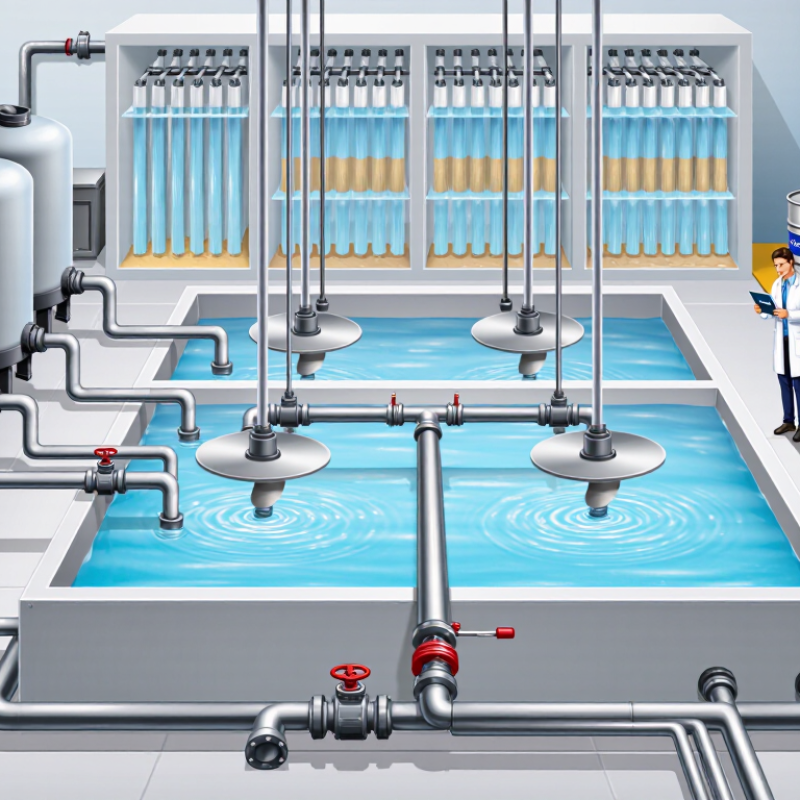
Chemical dosing means adding measured amounts of treatment chemicals to water for a specific purpose. The goal is control, not simply adding more chemicals. Coagulants help suspended particles join together, while disinfectants reduce harmful microorganisms. pH adjustment chemicals improve treatment performance and protect pipes from corrosion.
A dosing system usually includes a storage tank, metering pump, injection point, and monitoring instruments. Operators may use flow meters and pH sensors to adjust the dose as water conditions change. A jar test can show how much coagulant the water needs before full-scale treatment begins. Small changes matter. An extra few millilitres can affect clarity, pH, and chemical residuals.
Good dosing depends on calibration and observation. Pumps should be checked for output accuracy, and tanks need clear labelling and safe handling procedures. Operators also compare sensor readings with laboratory tests because instruments can drift. That detail is easy to overlook. In real facilities, sudden rainfall, temperature changes, or high turbidity can make yesterday’s setting unsuitable today.
More chemical is not always better. Overdosing may increase operating costs, create unwanted residuals, or make later treatment harder. Underdosing can leave particles, odour, or microorganisms insufficiently controlled. A practical operator adjusts gradually, records each change, and investigates unusual results. The process is precise, but never completely automatic. Human judgement still matters.
Chemical dosing means adding a controlled amount of a treatment chemical to water to remove contaminants, adjust pH, disinfect the water, or improve filtration. The representative values below show common dosing levels in milligrams per litre (mg/L); actual doses depend on raw-water quality, temperature, alkalinity, and jar-test results.
Chemical dosing begins with a clear treatment goal. Operators may need to remove suspended solids, control acidity, reduce scale, or destroy pathogens. Each goal requires a different chemical response. Coagulants gather tiny particles into larger flocs, while pH adjusters create better conditions for treatment. Disinfectants target microorganisms after physical contaminants have been removed.
Selection depends on the water itself. A sample may contain high alkalinity, dissolved metals, organic matter, or changing turbidity. Operators usually perform jar tests before full-scale dosing. These tests compare chemical types and doses in small beakers. The best result is not always the lowest dose. A low dose may leave cloudy water, while an excessive dose can increase sludge or chemical residuals. Small details matter.
Field conditions can also change the decision. Cold water often reacts more slowly. Heavy rainfall may suddenly increase turbidity. Feed pumps must match the measured flow, not yesterday’s reading. Online sensors help, but they still need calibration and human review. A practical lesson is simple: chemical selection should remain adjustable. One fixed setting may work for a week, then fail after a storm. Operators should check pH, turbidity, residual disinfectant, and sludge quality regularly. The process is measurable, but never perfectly predictable. Mistakes can happen. Careful records make them easier to detect and correct.
Chemical dosing equipment adds measured quantities of treatment chemicals to water. The process may involve coagulants, pH adjusters, disinfectants, or corrosion inhibitors. Each chemical serves a different purpose.
A typical system uses a storage tank, metering pump, injection point, and control panel. The pump moves chemical through a small delivery line. Its stroke length, speed, or operating time controls the dosage. A flow meter can adjust pumping as water demand changes. For example, a higher flow may require a higher chemical feed rate. The injection point should provide enough mixing. Poor mixing can create uneven treatment, even when the pump operates correctly.
Operators often connect dosing equipment to pH, oxidation-reduction potential, chlorine, or turbidity sensors. These instruments provide live process data. A controller compares the reading with the target value and changes the pump output. Safety features also matter. Check valves can prevent backflow, while alarms can identify an empty tank, blocked line, or failed pump. Secondary containment helps manage accidental leaks.
Automatic control is useful, but it is not perfect. Sensors can drift, foul, or respond slowly. Calibration must match actual site conditions. Experienced operators still inspect tubing, verify tank levels, and compare readings with laboratory tests. Small errors can accumulate. A system may appear stable while delivering too much or too little chemical. Good dosing depends on equipment, water quality, maintenance, and careful human judgment.
Chemical dosing improves water quality by changing how unwanted substances behave. In a treatment tank, coagulants neutralize the electrical charges around fine particles. These particles then collide and form larger clusters called flocs. The flocs become heavy enough to settle or filter out.
The reaction is visible in practice. Cloudy water slowly forms soft, brownish flakes during a jar test. Operators adjust the dose, mixing speed, and pH to create strong flocs. Too little chemical leaves particles suspended. Too much can increase sludge and leave unwanted residues. Small changes matter.
Oxidizing agents can break down iron, manganese, odors, and some organic compounds. Disinfectants then damage microorganisms by disrupting their cell walls and internal chemistry. Contact time, temperature, and pH affect this performance. Water professionals test samples before changing equipment settings. They also check residual levels after treatment, not just the appearance of the water.
Raw water rarely stays consistent. Rain can add soil and organic matter, while seasonal changes may alter pH and temperature. A reliable process needs records, calibrated instruments, and trained judgment. Chemistry helps, but it does not remove the need for observation. A clear sample can still hide problems.
| Treatment Chemical | Primary Treatment Objective | Main Reaction or Mechanism | Typical Dose Range* | Common Operating pH | Water-Quality Improvement | Important Control Parameter |
|---|---|---|---|---|---|---|
| Aluminum sulfate (alum) | Coagulation and removal of suspended particles | Hydrolysis forms aluminum hydroxide flocs that adsorb and enmesh particles. | 10–100 mg/L as product | 5.5–7.5 | Lower turbidity, color, natural organic matter, and some microorganisms attached to particles | Jar-test dose, alkalinity, pH, rapid-mix intensity, and flocculation time |
| Ferric chloride | Coagulation, color removal, and phosphorus reduction | Ferric ions hydrolyze to form ferric hydroxide precipitates that capture dissolved and suspended contaminants. | 5–100 mg/L as product | 4.5–8.0 | Improves clarity and color while reducing phosphorus and particulate-bound contaminants | Residual iron, pH, alkalinity, sludge production, and mixing conditions |
| Polyaluminum chloride (PAC) | Coagulation with reduced alkalinity consumption | Pre-hydrolyzed aluminum species neutralize particle charges and form aluminum-based flocs. | 5–50 mg/L as product | 5.5–8.5 | Reduces turbidity, color, and organic matter and can improve settling performance | Product basicity, jar-test results, residual aluminum, and raw-water temperature |
| Sodium hydroxide (NaOH) | pH adjustment and alkalinity control | Dissociates to release hydroxide ions, increasing pH and neutralizing acidity. | 5–100 mg/L as product | 7.0–9.0 | Creates suitable conditions for coagulation, corrosion control, and disinfection | Online pH, alkalinity, chemical strength, and dosing-pump calibration |
| Sodium hypochlorite | Disinfection and maintenance of a protective chlorine residual | Forms hypochlorous acid (HOCl), which oxidizes essential cellular components of microorganisms. | 1–10 mg/L as available chlorine | 6.5–8.0 | Inactivates many bacteria and viruses and helps prevent regrowth in distribution systems | Contact time, temperature, pH, chlorine demand, and free-chlorine residual |
| Chlorine dioxide | Disinfection and oxidation of selected taste-and-odor compounds | Acts as a selective oxidant that disrupts microbial cell processes. | 0.2–2.0 mg/L | 6.0–9.0 | Controls microorganisms, tastes, odors, and some iron and manganese compounds | Chlorite and chlorate formation, contact time, residual, and precursor control |
| Ozone (O₃) | High-level oxidation and primary disinfection | Ozone directly oxidizes contaminants and can generate hydroxyl radicals in water. | 0.5–5.0 mg/L applied | 6.0–9.0 | Inactivates microorganisms and reduces color, taste, odor, and some organic contaminants | Ozone residual, contact time, bromide concentration, pH, and off-gas destruction |
| Potassium permanganate | Oxidation of dissolved iron, manganese, and sulfide | Oxidizes soluble contaminants into less-soluble forms that can be filtered. | 0.5–5.0 mg/L | 7.0–9.0 | Reduces staining, metallic taste, odor, and dissolved metal concentrations | Oxidant demand, contact time, manganese dioxide formation, and breakthrough monitoring |
| Sodium bisulfite | Dechlorination before membrane treatment or discharge | Rapidly reduces free chlorine and related oxidants to chloride ions. | 1.5–3.0 mg/L per mg/L chlorine | 6.0–8.5 | Protects chlorine-sensitive membranes and aquatic receiving environments | Oxidant residual, sulfite residual, dissolved oxygen, and dosing ratio |
| Polymers | Floc enhancement and improved solid-liquid separation | Long-chain molecules bridge destabilized particles and increase floc size and strength. | 0.05–5.0 mg/L active polymer | 5.0–9.0 | Improves settling, flotation, filtration, and sludge dewatering performance | Polymer type, solution age, mixing energy, feed concentration, and residual turbidity |
Chemical dosing keeps water within controlled treatment ranges. Pumps add measured coagulants, disinfectants, or pH-adjusting chemicals. Operators then verify the result through flow, pH, turbidity, and disinfectant-residual readings. Small changes matter. A blocked injection line can leave clear-looking water inadequately treated.
Monitoring should combine instruments with human checks. A control system can trigger alarms when flow falls, residual changes, or tank levels drop. Automatic shutdowns should respond to leaks, empty tanks, and abnormal pressure. Operators still need routine calibration, because a drifting sensor can create false confidence.
The World Health Organization and UNICEF reported that 2.2 billion people lacked safely managed drinking water in 2022, highlighting why reliable verification matters (WHO/UNICEF Joint Monitoring Programme, 2023). In practice, a technician may compare an online reading with a fresh bench test beside the process line.
Safe management also depends on site discipline. Chemical containers need clear labels, secondary containment, ventilation, and controlled access. Written procedures should cover delivery, dilution, spill response, maintenance, and emergency isolation.
Records should show dose settings, alarm events, calibration results, and corrective actions. The U.S. EPA’s 7th Drinking Water Infrastructure Needs Survey estimated $625 billion in needs over 20 years, showing the scale of maintaining dependable systems (U.S. EPA, 2023).
Technology helps, but it does not remove responsibility. That assumption deserves regular challenge.
Selection starts with the treatment goal. Coagulants remove suspended particles, while pH adjusters improve reaction conditions. Disinfectants target microorganisms.
Water may contain alkalinity, metals, organic matter, or changing turbidity. A small sample reveals these differences. Water is rarely consistent.
A jar test compares chemical types and doses in small beakers. Operators observe floc formation, clarity, and sludge. The lowest dose may not work best.
Cold water can slow chemical reactions. Heavy rain may sharply increase turbidity. The previous setting may fail after a storm.
A typical system includes a storage tank, metering pump, delivery line, injection point, and control panel. Each part has a practical job.
Pump speed, stroke length, or operating time controls the feed rate. Higher water flow may require more chemical. Small adjustments matter.
Sensors measure pH, turbidity, disinfectant levels, or oxidation-reduction conditions. A controller compares readings with targets and adjusts pump output.
Not reliably. Sensors can foul, drift, or respond slowly. Operators should inspect tubing, check tank levels, and compare readings with laboratory tests.
Check valves help prevent backflow. Alarms can detect empty tanks, blocked lines, or pump failure. Secondary containment helps control accidental leaks.
They should review pH, turbidity, disinfectant residuals, sludge quality, and flow readings. Careful records expose small errors. The process remains imperfect.
Chemical dosing is the controlled addition of specific chemicals to water so unwanted substances can be removed, neutralized, or transformed. To understand how does chemical dosing work in water treatment, it is important to begin with the treatment goal. Different chemicals may be selected to adjust pH, disinfect water, promote coagulation and flocculation, reduce hardness, or remove dissolved contaminants. The choice and quantity depend on water quality, flow rate, temperature, and required treatment results.
Dosing equipment typically uses storage tanks, pumps, injection points, and control systems to deliver accurate amounts of chemicals. Once added, the chemicals react with impurities or create conditions that help particles settle, filter, or become easier to remove. Operators monitor flow, chemical concentration, pH, turbidity, and other key indicators to maintain consistent performance. Safe management also includes secure storage, protective procedures, equipment inspections, automatic alarms, and regular calibration. Properly designed and monitored dosing systems improve water quality while reducing waste and supporting reliable, responsible treatment operations.
