Olaprixa Industrial
Olaprixa Industrial
Olaprixa Industrial
Professional Insight
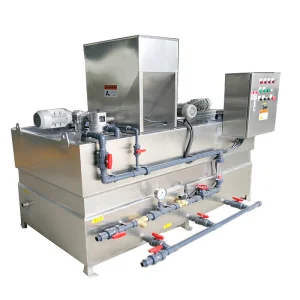
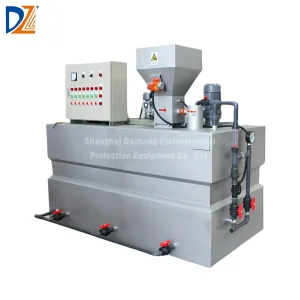
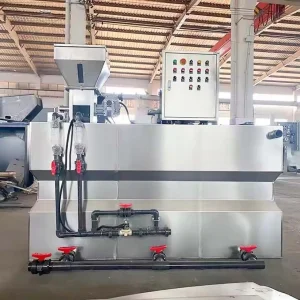
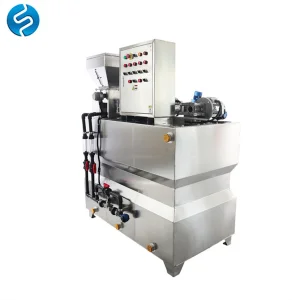
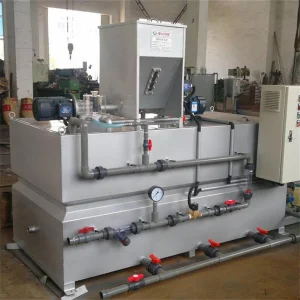
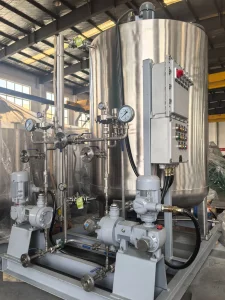
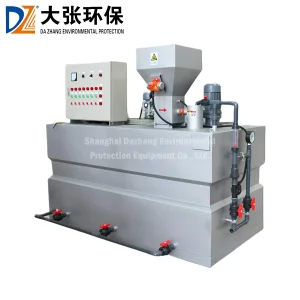
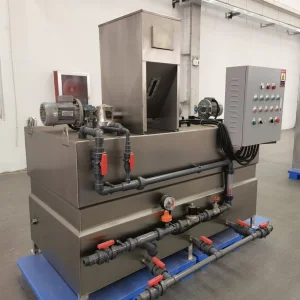
In the modern industrial landscape, Polymer Dosing Systems have evolved from simple manual mixing tanks to highly sophisticated, fully automated preparation units. As global environmental regulations tighten, the demand for efficient flocculation and coagulation in wastewater treatment has skyrocketed. Today, these systems are the backbone of sludge conditioning, water purification, and chemical processing in over 150 countries.
From the massive municipal wastewater plants in Europe to the rapidly expanding mining sectors in South America and Australia, the need for precision in PAC (Polyaluminum Chloride) and PAM (Polyacrylamide) dosing is paramount. Factories are no longer just selling machines; they are providing "process stability" through intelligent PLC control systems and high-grade SS304/SS316 corrosion-resistant hardware.
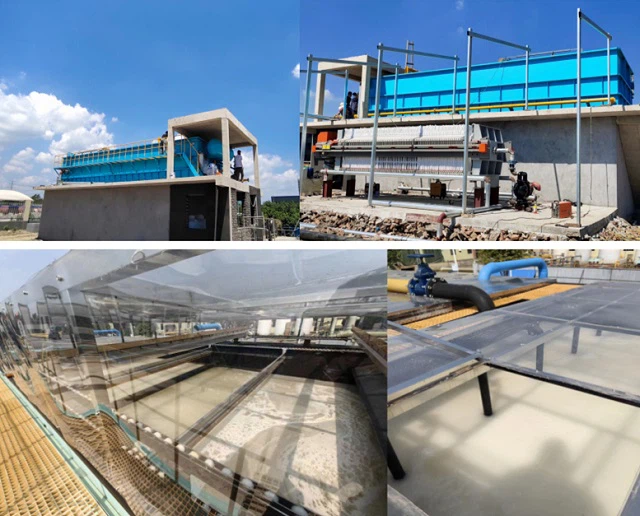
1. Industry 4.0 Integration: IoT-enabled dosing pumps and sensors now allow for remote monitoring and real-time adjustment of chemical concentrations.
2. Sustainability & ESG: Reducing chemical waste is a top priority. Modern systems minimize "fish-eyes" (undissolved polymer) to lower operational costs by up to 30%.
3. Skid-Mounted Designs: Global buyers prefer plug-and-play modular units that reduce on-site installation time and labor costs.
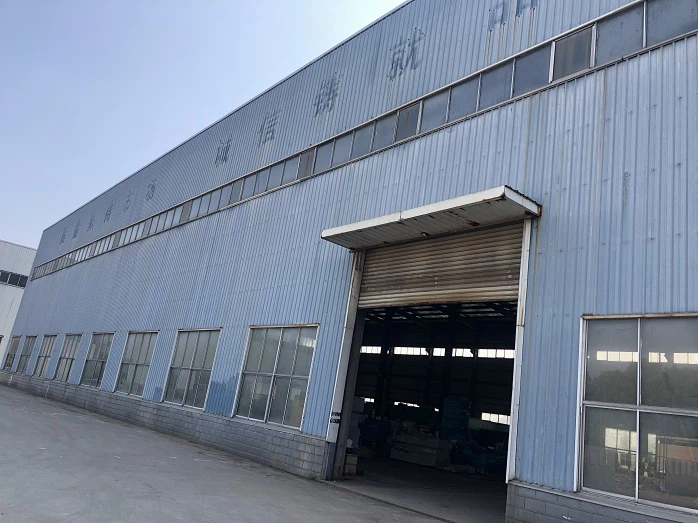
As a leading China-based manufacturer, Shanghai Olaprixa Industrial Co., Ltd. leverages a complete local supply chain. From premium stainless steel fabrication to advanced electronic components, we ensure shorter lead times compared to Western counterparts without compromising on quality.
Every industrial project has unique parameters. Our engineering team specializes in tailoring dosing capacities (from 500L/h to 10,000L/h) and control logic (Siemens PLC, HMI touchscreens) to meet specific localized application scenarios in diverse climates.
Global procurement managers seek the best balance between Capex and Opex. Chinese factories offer state-of-the-art technology at a competitive price point, providing international exporters a significant edge in large-scale bidding processes.
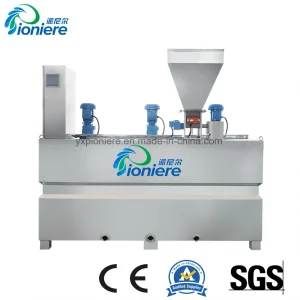
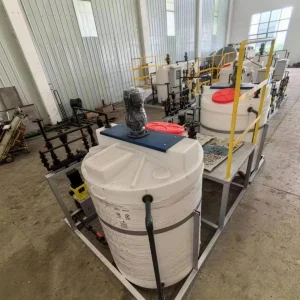
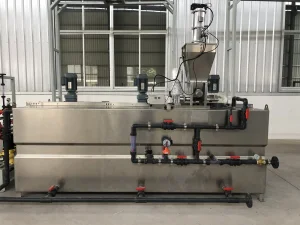
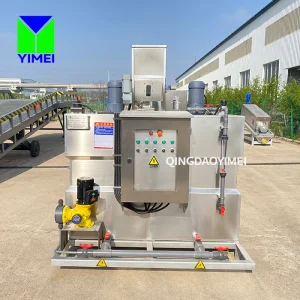
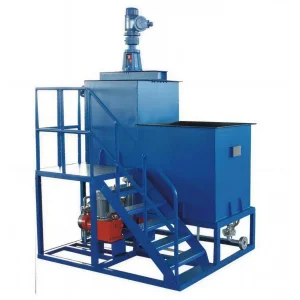
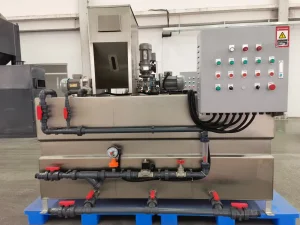
A reliable Polymer Dosing System must handle both dry powder and liquid concentrates. The preparation of Polyacrylamide (PAM) requires a three-stage maturation process: Mixing, Maturation, and Storage. Without precise control, the polymer chains can shear or fail to hydrate, leading to massive chemical waste.
Key Components of our Systems:
Our systems are engineered for diverse global environments.
High-volume municipal plants in North America and Europe utilize our automatic preparation units for secondary sedimentation and sludge thickening, ensuring compliance with strict discharge permits.
In high-altitude or remote mining sites (e.g., Chile, South Africa), our skid-mounted, robust systems handle abrasive slurries and facilitate rapid water recovery in tailing dams.
Customized PVC and SS316 systems are used in dairies and breweries to treat high-BOD effluent, integrating seamlessly with existing DAF (Dissolved Air Flotation) units.
Paired with belt presses or screw presses, our dosing systems optimize the floc size, significantly improving the dryness of the final sludge cake and reducing disposal costs.
With a headquarters in Shanghai, we are more than just a factory; we are an engineering provider. Our commitment to E-E-A-T principles means every system we export is backed by rigorous testing, detailed documentation, and a global support network. We understand that in the world of industrial water treatment, downtime is not an option.
Our team of experienced engineers continuously works to enhance system efficiency, reduce energy consumption, and improve resource recovery. Committed to sustainability and innovation, we aim to help global clients achieve cleaner production, water reuse, and long-term environmental responsibility through smart and cost-effective treatment technologies.