Olaprixa Industrial
After wastewater treatment, the remaining sludge carries water, organic matter, nutrients, pathogens, and industrial contaminants. How is sludge processed after wastewater treatment? The answer depends on its composition, local regulations, climate, and final-use strategy. It is not waste alone.
Operators usually begin with thickening, which reduces excess water before digestion or stabilization. Gravity thickeners, dissolved-air flotation, and centrifuges are common choices. Anaerobic digestion can produce biogas while reducing volatile solids and odors. The U.S. Environmental Protection Agency identifies pathogen reduction and vector attraction reduction as essential biosolids management goals under its regulatory framework.
Dewatering follows. Belt presses, screw presses, and centrifuges turn liquid sludge into a cake that is easier to transport. Moisture changes everything. A wetter cake requires more fuel, storage space, and hauling capacity. Some facilities use thermal drying, composting, incineration, or controlled land application. Each route has trade-offs involving energy, emissions, nutrients, and public acceptance.
UN-Water’s World Water Development Report has estimated that more than 80% of global wastewater is released without adequate treatment, although conditions vary widely between regions. That figure highlights the scale of future sludge management needs. The International Energy Agency also recognizes wastewater facilities as potential energy-recovery sites, especially where biogas is captured efficiently.
However, sludge is not automatically safe or valuable. PFAS, microplastics, pharmaceuticals, and heavy metals require careful monitoring. EPA risk assessments and European environmental guidance continue to influence stricter screening practices. No single pathway is universally best. Reliable processing combines laboratory testing, transparent reporting, trained operators, and long-term soil or disposal monitoring. The process is technical, but the consequences are visible: clearer effluent, fewer odors, and safer residuals.
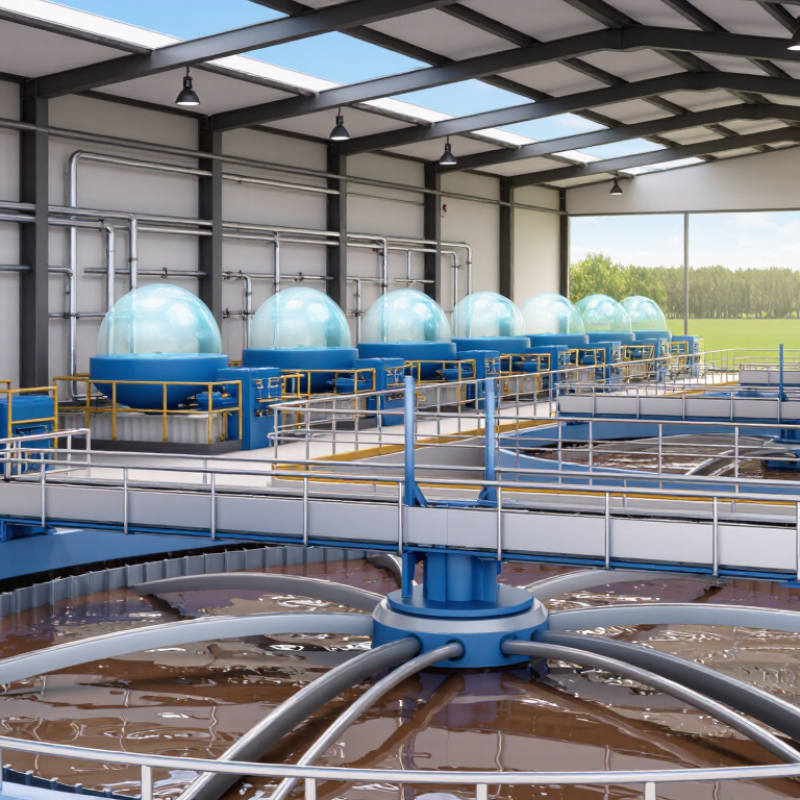
How Is Sludge Processed After Wastewater Treatment?
Sludge separation begins when wastewater leaves primary and biological treatment. Solids still contain water, organic matter, nutrients, and contaminants. Gravity settlers remove heavier particles, while dissolved air flotation captures lighter biological solids. Belt thickeners and centrifuges can also separate water quickly, but their results depend on sludge age and chemistry. Small changes matter.
Initial thickening reduces the volume sent to digestion or dewatering. Typical mixed sludge may contain only 0.5–1% solids before thickening. Gravity thickening often raises this level to about 3–6%, while mechanical systems can achieve higher concentrations. The U.S. EPA reports approximately 7.2 million dry metric tons of biosolids are generated annually in the United States. That volume makes early water removal a major energy and transport concern.
Operators normally track total solids, volatile solids, settling rate, and polymer demand. The European Commission has estimated roughly 10 million tonnes of sewage sludge dry matter arise annually across Europe. However, reported figures vary with sampling methods and moisture definitions. This is easy to overlook. A thickener may appear efficient while producing unstable solids or poor overflow quality. Field experience shows that equalization, careful mixing, and gradual feed adjustments often outperform aggressive chemical dosing. Sampling still needs improvement. One laboratory result cannot represent an entire day of changing sludge.
After wastewater treatment, sludge still contains water, organic matter, microbes, and unpleasant odors. Stabilization makes it safer to handle and easier to transport. It also reduces rapid decomposition during storage.
Biological processing uses living microorganisms to break down organic solids. In anaerobic digestion, microbes work without oxygen inside sealed tanks. They reduce volatile solids and produce biogas, which can support energy recovery. Aerobic stabilization uses oxygen instead. Air is supplied to keep microorganisms active and limit odors. Temperature, mixing, retention time, and pH require careful control. Small changes can affect performance. Operators regularly test solids, oxygen levels, alkalinity, and pathogen indicators.
Chemical processing takes a different route. Adding alkaline materials can raise pH and reduce many pathogens. It may also improve odor control and create a drier, more manageable material. However, chemical treatment increases material volume and may raise handling costs. It does not remove every contaminant. That point deserves attention.
Neither method is perfect. Biological systems need time and stable operating conditions. Chemical systems need accurate dosing and consistent mixing. Poorly stabilized sludge can smell strongly, attract insects, or remain unsafe for beneficial reuse. Even well-managed sludge requires laboratory testing before final disposal or land application. In practice, the best choice depends on sludge composition, equipment, climate, and local requirements. Sometimes, a combined approach offers better control than relying on one method alone.
After wastewater treatment, sludge still contains enormous amounts of water. Dewatering reduces this liquid burden before transport, drying, or final processing. The U.S. Environmental Protection Agency reports that American facilities generate about 7.2 million dry metric tons of sewage sludge annually. The actual wet mass is far larger because untreated sludge commonly contains more than 95% water.
Dewatering begins with conditioning. Polymers help bind fine particles, while centrifuges, belt filter presses, and screw presses separate water from solids. According to the U.S. EPA’s Biosolids Technology Fact Sheet, belt presses commonly produce cake with roughly 15–30% solids, depending on sludge quality and operating conditions. A centrifuge may reach similar levels, but electricity demand can be higher. Operators should inspect the cake by hand. It should hold shape without releasing pools of liquid. That simple check catches problems data may miss.
Filtration performance changes with temperature, polymer dosage, and biological composition. The Water Environment Federation notes that sludge properties can vary significantly between treatment plants and seasons. Overdosing polymer can raise costs and create sticky cake. Underdosing can send cloudy filtrate back into the plant. The driest cake is not always the best result. Operators must balance solids capture, energy use, odor control, and equipment wear. Field records should include feed solids, cake solids, polymer consumption, and filtrate clarity. Some records remain incomplete. That weakness deserves attention.
How Is Sludge Processed After Wastewater Treatment?
Recovering Useful Resources from Treated Sludge
After wastewater treatment, sludge still contains water, organic matter, nutrients, and trace contaminants. Facilities usually thicken and dewater it before further processing. Centrifuges or belt presses can turn watery sludge into a dense cake. The separated water returns for additional treatment.
The organic fraction can support anaerobic digestion. Inside sealed tanks, microorganisms break down the material and produce biogas. This gas may generate heat or electricity for plant operations. Digestion also reduces odors and stabilizes the remaining solids. It is not a perfect process. Gas output changes with temperature, feed quality, and operating conditions.
Dewatered solids may become soil amendments when testing confirms safety. Laboratories check pathogens, metals, nutrient levels, and persistent chemicals. Proper treatment and controlled application help return nitrogen and phosphorus to farmland without overloading soil or water. Some facilities recover phosphorus as a mineral product, especially when wastewater contains high nutrient concentrations. Operators must track each batch carefully, because treated sludge is not automatically safe for every use. A clean appearance proves very little. Even small contaminant levels can matter over time. Reliable recovery depends on sampling, documented procedures, trained staff, and compliance with local environmental rules.
| Processing Stage | Material or Resource | Typical Process Conditions | Typical Output | Environmental or Practical Benefit |
|---|---|---|---|---|
| Sludge thickening | Primary sludge and waste activated sludge | Gravity, dissolved-air, rotary-drum, or centrifuge thickening; feed solids commonly range from about 0.5% to 7% | Thickened sludge commonly reaches approximately 3%–7% total solids | Reduces liquid volume and lowers pumping, heating, and downstream equipment requirements |
| Anaerobic digestion | Biogas and stabilized biosolids | Mesophilic digestion is commonly operated near 35–38°C, with retention often around 15–25 days | Biogas typically contains about 55%–65% methane; volatile solids are reduced and sludge is stabilized | Produces renewable energy while reducing odor potential and the amount of biodegradable solids |
| Biogas cleaning and energy recovery | Methane-rich renewable gas | Moisture, hydrogen sulfide, siloxanes, and other contaminants are removed before use | Electricity, heat, combined heat and power, or upgraded biomethane | Offsets purchased electricity and fuels; heat can maintain digester temperature |
| Thermal hydrolysis or advanced pretreatment | More biodegradable organic matter | Steam-based treatment commonly uses approximately 150–180°C for a short holding period before digestion | Improved digestion performance and potentially higher biogas production | Can improve dewaterability, increase digester capacity, and reduce the final solids volume |
| Phosphorus recovery | Struvite or other phosphorus-rich mineral products | Controlled precipitation generally requires magnesium, phosphate, and ammonium, often at pH values around 7.5–9.0 | Crystalline struvite, chemically magnesium ammonium phosphate | Recovers a plant nutrient and helps control scale formation in pipes and dewatering equipment |
| Dewatering | Dewatered sludge cake and separated liquid | Centrifuges, belt filter presses, screw presses, or filter presses; polymer conditioning is commonly used | Sludge cake commonly contains approximately 18%–30% dry solids, depending on sludge type and equipment | Reduces hauling volume and makes further drying, composting, land application, or thermal treatment easier |
| Composting | Organic soil amendment | Dewatered sludge is mixed with a bulking agent; active composting commonly reaches temperatures above 55°C for pathogen reduction | Stable, humus-like material when regulatory and quality requirements are met | Recycles organic matter and nutrients while reducing the need for disposal |
| Land application | Nutrient-rich biosolids | Requires treatment, pathogen control, contaminant monitoring, soil testing, and application-rate management | Biosolids used as a soil amendment where permitted by local regulations | Returns organic carbon, nitrogen, phosphorus, and micronutrients to soil |
| Drying and pelletizing | Dried biosolids or fuel pellets | Thermal drying removes most remaining water; final moisture depends on the intended use and process design | Higher-solids material that is easier to store, transport, and handle | Reduces transportation demand and may create a usable soil product or supplemental fuel |
| Pyrolysis or gasification | Biochar, syngas, and heat | Thermochemical conversion is performed with limited oxygen after the sludge has been sufficiently dried | Carbon-rich char, combustible gas, and recoverable thermal energy | Reduces organic waste volume and can retain part of the phosphorus and mineral content in the ash or char |
| Incineration and ash recovery | Heat and phosphorus-rich ash | Dewatered or dried sludge is combusted; flue gas treatment is required to control particulate matter and other pollutants | Mineral ash, with phosphorus potentially recovered through additional processing | Minimizes final volume and may recover energy and minerals from the inorganic fraction |
Note: Values are typical engineering ranges for municipal wastewater sludge and can vary with wastewater composition, treatment technology, climate, and local regulatory requirements.
After wastewater treatment, sludge still contains water, organic matter, nutrients, and possible contaminants. Operators usually thicken it before further processing. Anaerobic digestion can reduce odors and produce biogas for facility energy. Aerobic treatment is another option for smaller systems. The treated material is then dewatered using presses, centrifuges, or drying beds. Its texture may change from liquid mud to a dense, crumbly cake. That change reduces transport costs. However, dewatering does not remove every contaminant. Careful testing remains essential.
The final sludge product may support soil improvement when regulations and test results allow it. It can add organic matter and nutrients to selected farmland or land restoration projects. Application rates must match soil conditions and crop needs. Too much nitrogen can damage water quality. Some facilities also use treated sludge in thermal processing or controlled disposal sites. Each route requires documented sampling, trained operators, and traceable records. Testing often checks pathogens, metals, moisture, and chemical compounds. Results can vary between batches, even at one facility. That uncertainty deserves more attention. A material that looks clean may still need restricted use. Disposal is sometimes the safer choice when contamination is high or monitoring is incomplete. Engineers should explain those decisions clearly, rather than presenting beneficial use as automatically better.
Typical total solids content at major sludge-processing stages
Sludge is commonly thickened, stabilized through digestion, and mechanically dewatered before its final destination is selected. Higher solids content generally reduces transport volume, while the final product may be safely disposed of or beneficially used as biosolids, soil amendment, or fuel feedstock when it meets applicable pathogen, contaminant, and local regulatory requirements. The values shown are representative municipal wastewater-treatment ranges.
Stabilization reduces odors, decomposition, and handling risks. It also makes storage and transport more manageable.
Microorganisms break down organic solids. Anaerobic systems work without oxygen, while aerobic systems use supplied air.
It reduces volatile solids and produces biogas. Facilities may use the gas for heat or electricity.
Operators monitor temperature, mixing, retention time, pH, oxygen, and alkalinity. Small changes can affect results.
Alkaline materials raise pH and reduce many pathogens. They may also control odors and create drier solids.
It can increase material volume and handling costs. It does not remove every contaminant. That matters.
Centrifuges, belt presses, and drying beds separate water. The material may change from liquid mud to a crumbly cake.
Sometimes. Testing must confirm safe pathogen, metal, nutrient, and chemical levels before application.
Laboratories examine pathogens, metals, moisture, nutrients, and persistent chemicals. Results can vary between batches.
Disposal may be safer when contamination is high or monitoring is incomplete. A clean appearance proves little.
How is sludge processed after wastewater treatment? The process begins with separating sludge from treated water and thickening it to reduce volume. This concentrated material is then stabilized through biological methods, such as controlled digestion, or through carefully managed chemical treatment. Stabilization helps reduce odors, pathogens, and the amount of easily decomposable organic matter, making the sludge safer and easier to handle.
Next, water is removed using methods such as centrifugation, filtration, or pressing. The resulting sludge cake may be further treated to recover useful resources, including nutrients, organic matter, or energy. Depending on its quality and local regulations, the final product can be safely disposed of or beneficially used in applications such as soil improvement, land restoration, or fuel generation. Throughout every stage, monitoring is essential to control contaminants, protect public health, and ensure that the material is managed responsibly.
