Olaprixa Industrial
Olaprixa Industrial
Olaprixa Industrial
Engineered for precise fluid management, automated dosing, and high-efficiency purification.
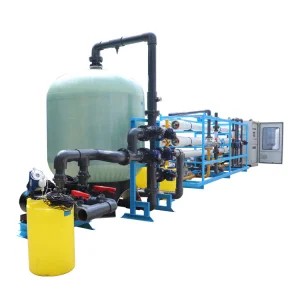
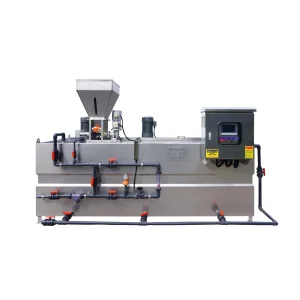
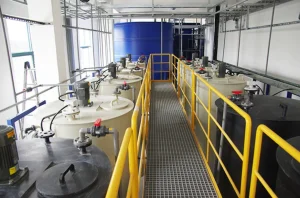
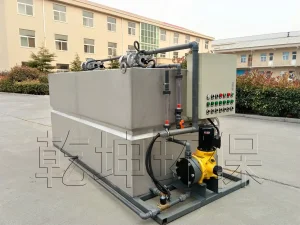
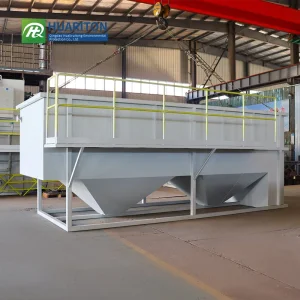
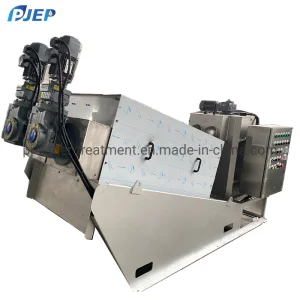
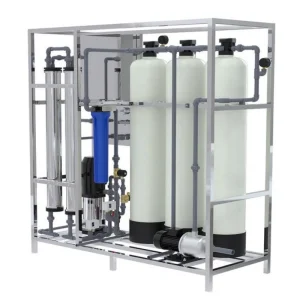
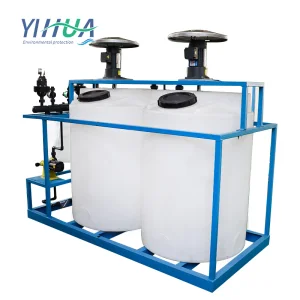
Shanghai Olaprixa Industrial Co., Ltd. is a specialized manufacturer and engineering provider focused on advanced industrial wastewater treatment solutions, integrating sludge processing systems and intelligent chemical dosing technologies. Headquartered in Shanghai, China, the company delivers efficient, reliable, and customized water treatment systems for a wide range of industries including manufacturing, chemical processing, food production, and municipal infrastructure.
As regulatory entities tighten nitrogen and phosphorus discharge limits globally, traditional activated sludge models are no longer sufficient. Olaprixa offers a comprehensive portfolio covering wastewater treatment equipment, sludge dewatering and thickening systems, and precision chemical dosing units designed to optimize treatment performance and operational efficiency. By combining modern process engineering with automation control, the company ensures stable system operation, reduced environmental impact, and compliance with global discharge standards.
With a strong emphasis on customization, Olaprixa provides tailored water engineering solutions based on specific project requirements, from initial consultation and system design to installation guidance and after-sales technical support. Its team of experienced engineers continuously works to enhance system efficiency, reduce energy consumption, and improve resource recovery. Committed to sustainability and innovation, Shanghai Olaprixa Industrial Co., Ltd. aims to help global clients achieve cleaner production, water reuse, and long-term environmental responsibility through smart and cost-effective treatment technologies.
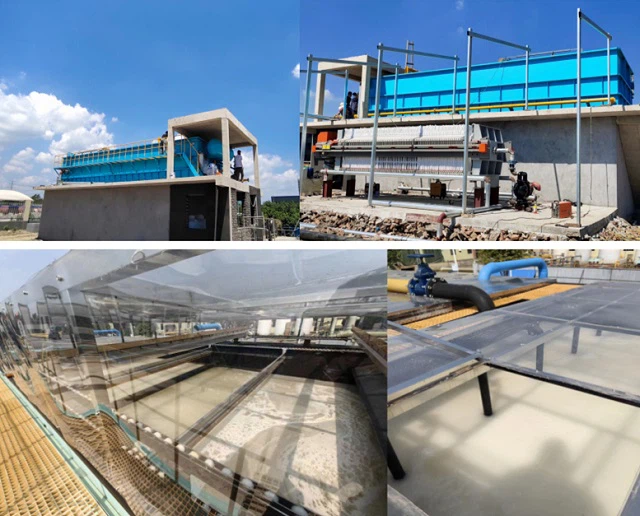
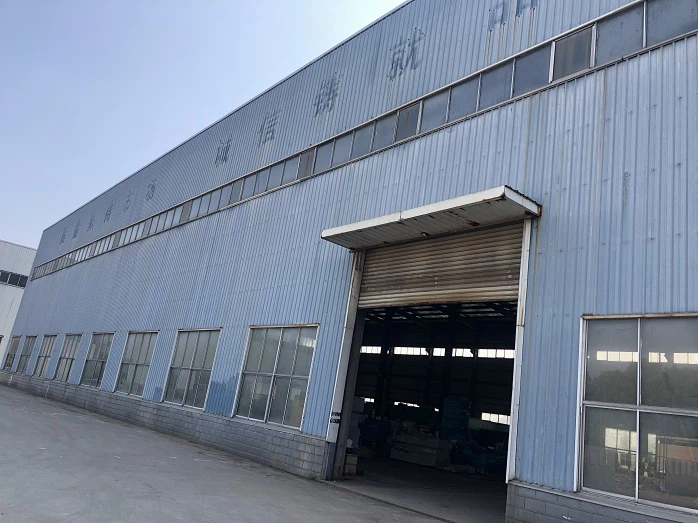
Our manufacturing and engineering practices are backed by comprehensive ISO 9001:2015 certifications, ensuring that every biological nutrient removal (BNR) vessel and integrated skid is constructed to withstand the harshest corrosive environments. By employing advanced manufacturing methodologies—such as automated TIG welding, dual-phase passivation, and dynamic finite element analysis (FEA)—we achieve operational lifespans exceeding 20 years.
Our technical center in Shanghai houses state-of-the-art pilot reactors where biological kinetics are evaluated under varying organic loading rates (OLRs) and chemical oxygen demand (COD) profiles. This continuous R&D approach allows us to translate lab-scale biological insights into robust industrial systems that minimize operating expenditures (OPEX) while exceeding international effluent requirements.
An authoritative breakdown of microbiological kinetics, nitrification-denitrification sequences, and biological phosphorus elimination mechanisms.
Biological Nutrient Removal (BNR) systems represent the pinnacle of biochemical engineering in modern wastewater treatment. The target is the simultaneous eradication of nitrogen ($N$) and phosphorus ($P$) compounds to prevent eutrophication in aquatic ecosystems. Nitrification is executed under strictly aerobic conditions ($DO > 2.0\text{ mg/L}$) by autotrophic nitrifying bacteria—principally Nitrosomonas (converting ammonium $NH_4^+$ to nitrite $NO_2^-$) and Nitrobacter (converting nitrite $NO_2^-$ to nitrate $NO_3^-$). This step consumes considerable alkalinity ($7.14\text{ g } CaCO_3\text{ per gram of } NH_4^+-N\text{ oxidized}$) and requires a sustained Mean Cell Residence Time (MCRT) of at least 8 to 15 days depending on the minimal wastewater temperature.
Following nitrification, denitrification proceeds under anoxic conditions ($DO < 0.2\text{ mg/L}$ with nitrate serving as the terminal electron acceptor). Heterotrophic denitrifiers (such as Pseudomonas, Paracoccus, and Alcaligenes) reduce $NO_3^-$ to nitrogen gas ($N_2$). This step recovers approximately $3.57\text{ g } CaCO_3$ of alkalinity per gram of nitrate reduced, alleviating some of the chemical buffering requirements of the treatment train. A critical factor in ensuring rapid denitrification is the Carbon-to-Nitrogen ($C:N$) ratio. An optimal COD to TKN ratio of $\ge 4.5$ is recommended to bypass the necessity for external carbon sources such as methanol or sodium acetate.
Simultaneously, Enhanced Biological Phosphorus Removal (EBPR) leverages Polyphosphate-Accumulating Organisms (PAOs), such as Candidatus Accumulibacter phosphatis. In the anaerobic zone ($DO = 0\text{ mg/L}, NO_3^- = 0\text{ mg/L}$), PAOs uptake volatile fatty acids (VFAs) and store them internally as Polyhydroxyalkanoates (PHAs), utilizing energy derived from the hydrolysis of intracellular polyphosphates. This process releases orthophosphate ($PO_4^{3-}$) into solution. When these PAOs pass into the aerobic zone, they oxidize the stored PHAs, using the released energy to uptake orthophosphate from the mixed liquor in quantities far exceeding what was originally released (luxury uptake). The phosphorus is subsequently removed from the stream by wasting the phosphorus-rich activated sludge.
The gold-standard design configuration that integrates separate zones for anaerobic phosphorus release, anoxic denitrification, and aerobic carbon oxidation and nitrification. Ensures optimal microbial selection and spatial separation.
By replacing secondary gravity clarifiers with hollow-fiber or flat-sheet ultrafiltration membranes, our MBR-BNR systems operate at elevated MLSS levels (8,000–12,000 mg/L), drastically reducing footprint requirements and achieving zero-solid effluent.
Leverages high-surface-area HDPE biomass carriers suspended in the aerobic and anoxic zones. This hybrid approach increases active biomass concentration without increasing hydraulic load on the secondary clarifiers, ideal for capacity upgrades.
Navigating complex international engineering standards, CE directives, and national discharge limits.
Deploying wastewater treatment plant components within the European Economic Area (EEA) demands absolute alignment with CE directives. Our BNR systems carry full CE certification under the following mandatory directives:
Additionally, we align our biological kinetic designs with the stringent requirements of the EU Urban Waste Water Treatment Directive (UWWTD), satisfying the most strict nitrogen (< 10 mg/L TN) and phosphorus (< 1 mg/L TP) limits required for discharge into sensitive water bodies.
To ensure seamless operation and structural validation in diverse target territories, Olaprixa maintains a dedicated field engineering network. We provide:
Leveraging China's manufacturing ecosystem to deliver unparalleled quality control, rapid lead times, and cost-efficiency.
Operating from Shanghai, the industrial heart of East China, Shanghai Olaprixa Industrial Co., Ltd. sits at the confluence of raw material supply, precision tooling, and global logistics hubs. By sourcing domestic high-grade alloys (AISI 304, 316L, and Super Duplex Stainless Steels) directly from Tier-1 mills, we mitigate international supply chain volatility and retain complete traceability over our material components. The centralization of localized component ecosystems—from high-pressure RO membrane housing to digital electromagnetic flowmeters—enables us to assemble, integrate, and dry-test complex treatment packages at a fraction of the time and cost compared to Western fabricators.
Tailoring modular configurations to meet unique industrial sectors, spatial constraints, and climatic realities.
Global procurement managers are continuously challenged to balance initial capital expenditures (CAPEX) with long-term operational costs (OPEX). BNR systems are highly sensitive to site-specific environmental variables. For example, a system designed for municipal wastewater in temperate regions will face severe kinetic limitations if relocated to sub-zero climates, as the growth rate of autotrophic nitrifiers drops by roughly 50% for every $10^\circ\text{C}$ decline in temperature. To address these variations, Olaprixa provides a comprehensive design matrix based on loading rates, target effluent, and regional parameters:
Equipped with integrated heat exchangers, high-density carrier media (MBBR) to maximize biofilm retention time, and automated inline heater controls to keep mixed liquor temperature above $12^\circ\text{C}$ during winter cycles.
Perfect for retrofitting congested footprints in municipal or industrial spaces. Built inside standard ISO shipping container frames, integrating the bioreactor, membrane module, and dosing system for plug-and-play installation.
Specifically engineered for food-processing, brewery, and chemical industries characterized by surging COD peaks. Features automated feed equalization, chemical pre-precipitation systems, and heavy-duty aeration blowers.
Innovative trajectories shaping the future of wastewater engineering: energy neutrality, digital twins, and resource circularity.
The wastewater treatment landscape is undergoing a radical shift from energy-intensive purification to resource-recovery biorefineries. Modern biological systems consume significant energy, particularly for aeration (representing up to 60% of a plant's power consumption). The integration of intelligent DO controllers utilizing real-time feedback loops from ammonia sensors (known as Ammonia-Based Aeration Control or ABAC) prevents over-aeration, slashing energy demands by up to 25%.
Furthermore, phosphorus recovery is transitioning from a chemical waste problem to a commercial opportunity. Through struvite ($MgNH_4PO_4 \cdot 6H_2O$) precipitation units, phosphorus is harvested from anaerobic digestate and processed into slow-release agricultural fertilizers. Concurrently, advancements in Aerobic Granular Sludge (AGS) technology are allowing nitrification, denitrification, and biological phosphorus removal to occur simultaneously within a single granular biomass particle, eliminating the need for separate reactors and spatial zoning.
Real-world evidence of Olaprixa systems solving distinct discharge and reuse challenges across global industries.
Location: Saxony, Germany
Challenge: Upgrading an aging municipal plant built in the 1990s to meet strict EU Class 4 effluent targets (< 5 mg/L TN and < 0.5 mg/L TP) within a constrained footprint.
Solution: Implementation of a hybrid IFAS (Integrated Fixed-film Activated Sludge) BNR system using custom biological carriers, combined with online optical sensors and digital chemical dosing loops.
Location: Monterrey, Mexico
Challenge: Processing high-salinity organic wastewater from an industrial bakery with COD fluctuating from 2,000 to 7,500 mg/L and high oil & grease load.
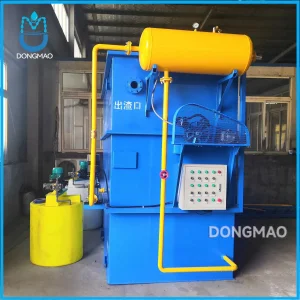
Solution: Prefiltration via integrated DAF (Dissolved Air Flotation) system, followed by a customized A2O reactor and MBR filtration skid to secure water reuse potential for cooling towers.
Location: Singapore
Challenge: Designing a space-efficient closed-loop water treatment system for an indoor vertical farm, requiring clean discharge with strict pathogen control.
Solution: Implementation of ultra-low volume biological nutrient removal integrated with a multi-stage RO purification unit, automatic pH dosing skids, and UV disinfection loops.
Addressing deep mechanical, biochemical, and procurement considerations for system design.
System sizing requires precise data on the design parameters of the influent wastewater stream:
CE certification ensures that the equipment complies with European harmonized safety standards. For BNR systems, this means:
Our biological nutrient removal reactors are fabricated using high-grade AISI 304 or AISI 316L stainless steel. All welds undergo professional acid cleaning and passivation to prevent localized corrosion at heat-affected zones. This design methodology ensures a mechanical structural lifespan of 20 to 25 years. Auxiliary equipment like pumps, blowers, and sensors have typical maintenance intervals of 3 to 7 years depending on operating conditions.
DO acts as the primary switch between biological zones. In the anaerobic zone, DO must be kept near 0.0 mg/L to enable PAOs to release phosphorus. In the anoxic zone, DO must remain below 0.2 mg/L to prevent inhibition of denitrifiers, which will utilize oxygen instead of nitrate as their electron acceptor if it is present. Conversely, in the aerobic zone, DO must be sustained at 1.5 to 2.5 mg/L to ensure nitrifying kinetics are not oxygen-limited.
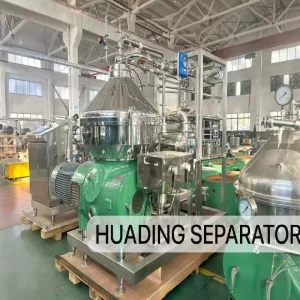
Explore our line of heavy-duty solids handling, separation, and dewatering equipment.