 Olaprixa Industrial
Olaprixa Industrial
Olaprixa Industrial
Engineered for high performance, ease of integration, and precise control over chemical profiles in commercial and industrial settings.
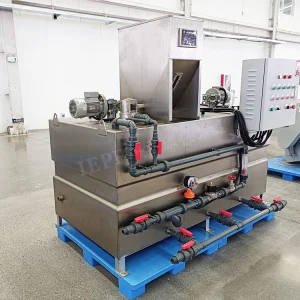
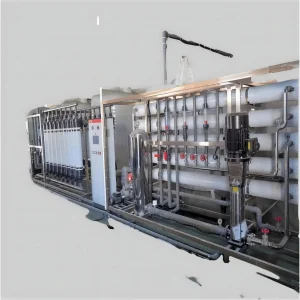
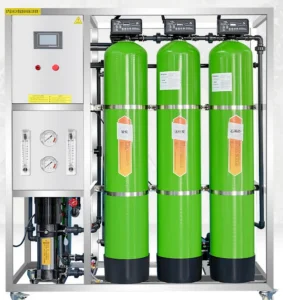
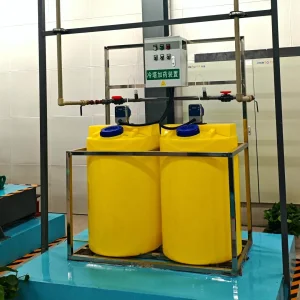
Understanding Western Australia's strict hydrological demands, trade waste frameworks, and mining-driven economy.
In Western Australia, particularly across the Swan Coastal Plain and industrial hubs such as the Kwinana Industrial Area, Henderson, and Welshpool, water resource management is critical. The regional groundwater profile typically exhibits high levels of carbonate hardness, varying concentrations of iron and manganese, and localized salinity fluctuations. For companies discharging trade waste into the public sewer network managed by the Water Corporation of Western Australia, compliance is not optional. The regulatory guidelines mandate strict pH discharge windows—typically between 6.0 and 10.0 for general trade waste, with narrower bands enforced in sensitive sub-catchment zones to prevent biological disruption in downstream treatment systems.
Additionally, Western Australia's heavy reliance on desalinated water—originating from the Perth Metropolitan Desalination Plant (PSDIP) and the Southern Seawater Desalination Plant (SSDP)—creates water streams with unique chemistries. This water requires precise post-desalination treatment, including remineralization and pH stabilization, to prevent aggressive corrosion within distribution networks and downstream industrial piping structures. As a result, robust pH adjustment dosing systems are essential to keep operations compliant, prevent scale formation, and safeguard high-value infrastructure from corrosion.
Achieving stable pH correction through advanced control algorithms and rugged hydraulic engineering.
Because pH is a logarithmic measurement, dosing strong acids or bases into low-buffered water streams can lead to extreme chemical oscillations (pH overshoot). To prevent this, our systems utilize Proportional-Integral-Derivative (PID) loop controllers integrated within a Siemens or Allen-Bradley PLC. This allows for predictive adjustments based on incoming flow rates (feedforward loop) and real-time downstream pH feedback.
The mechanical layout utilizes electromagnetic or motor-driven diaphragm pumps, featuring integrated stroke rate controllers. The mixing chamber uses customized inline static mixers to ensure homogeneous chemical distribution before the water reaches the sensor probe assembly. This reduces lag times and guarantees accurate measurement data.
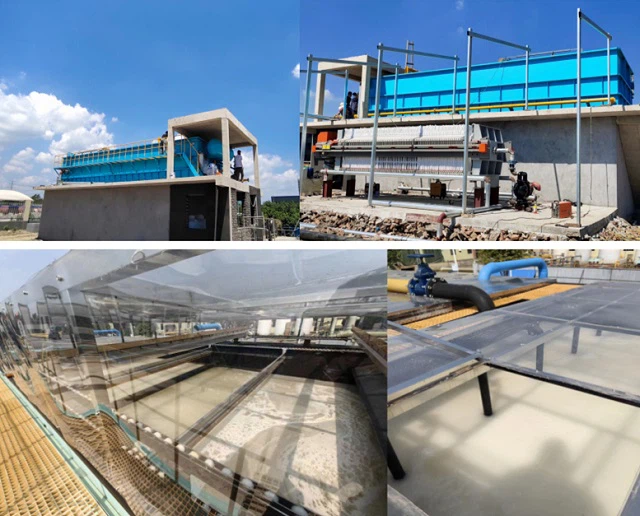
A diverse range of industrial systems optimized for wastewater management, cooling water treatment, and municipal services across Perth.
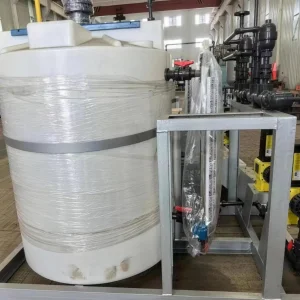
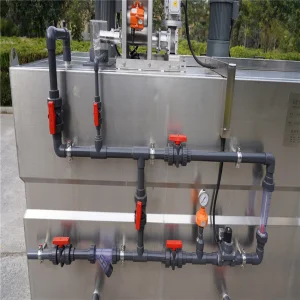
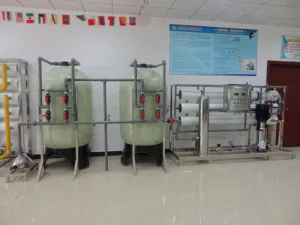
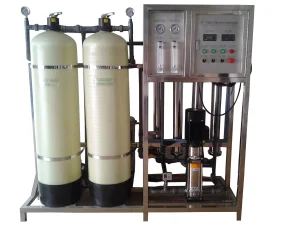
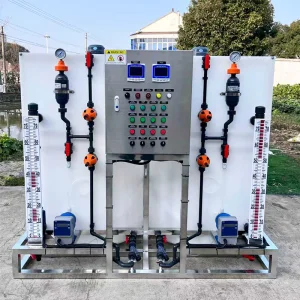
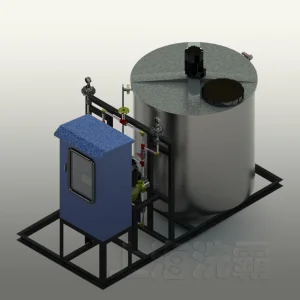
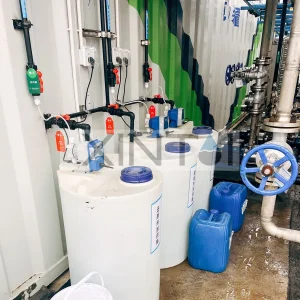
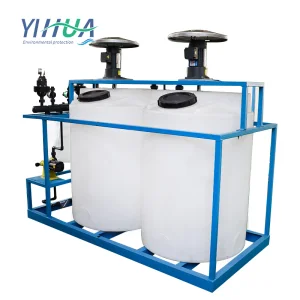
Providing specialized dosing architectures to meet the requirements of Western Australia's major industrial sectors.
Western Australia's mining sector relies heavily on chemical dosing. Acid rock drainage (ARD), tailings recovery water, and mineral separation processes require precise chemical control. Tailings water neutralization involves neutralizing acidic slurries using lime (calcium hydroxide) or sodium hydroxide. Our heavy-duty dosing systems are built to handle high solid contents and corrosive slurries, preventing calcium carbonate scaling and maintaining optimal pH levels for tailing pond recirculation.
In thermal and industrial processing plants, cooling tower water undergoes evaporation, concentrating dissolved salts and raising both pH and saturation indices (LSI). Left unchecked, this causes calcium carbonate precipitation on heat exchanger tubes, which lowers thermodynamic efficiency. Our automated cooling tower dosing units measure pH and conductivity in real-time, dosing precise amounts of sulfuric or hydrochloric acid to maintain stable LSI values and keep the systems clean.
Reverse osmosis membranes are susceptible to chemical scaling and biofouling. Ground and brackish feedwaters in Perth often require chemical correction prior to filtration. Correcting feed pH is essential to prevent silica scaling, which is difficult to clean, and to optimize the performance of anti-scalants. Additionally, treating biofouling requires chlorine dosing followed by bisulfite treatment to neutralize residual oxidant before the water contacts polyamide membranes.
Off-grid solar-powered purification, mining camp solutions, and high-efficiency filtration assemblies.
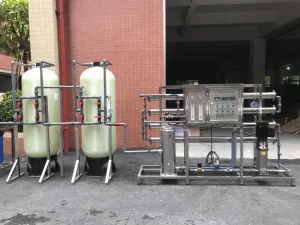
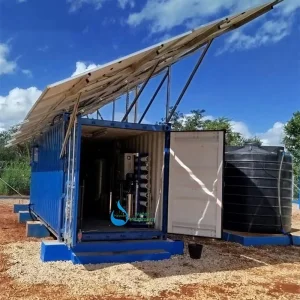
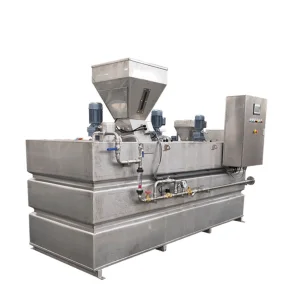
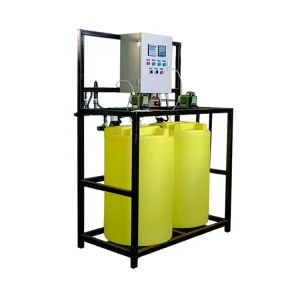
A specialized manufacturer and engineering provider of advanced wastewater treatment solutions, sludge processing, and chemical dosing systems.
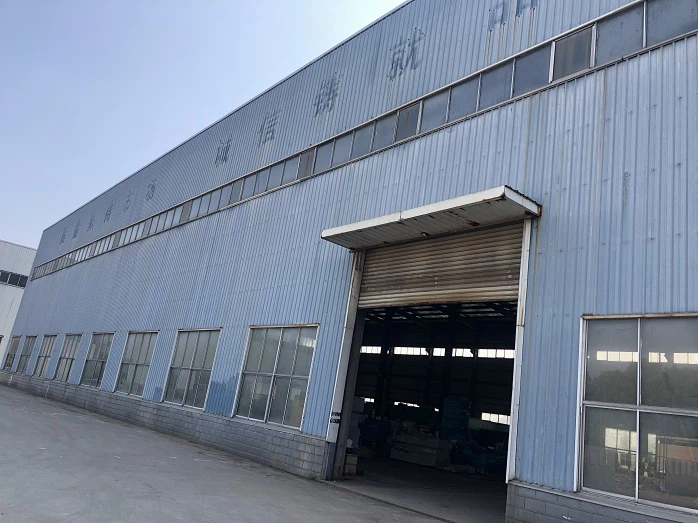
Shanghai Olaprixa Industrial Co., Ltd. is a specialized manufacturer and engineering provider focused on advanced industrial wastewater treatment solutions, integrating sludge processing systems and intelligent chemical dosing technologies. Headquartered in Shanghai, China, the company delivers efficient, reliable, and customized water treatment systems for a wide range of industries including manufacturing, chemical processing, food production, and municipal infrastructure.
Olaprixa offers a comprehensive portfolio covering wastewater treatment equipment, sludge dewatering and thickening systems, and precision chemical dosing units designed to optimize treatment performance and operational efficiency. By combining modern process engineering with automation control, the company ensures stable system operation, reduced environmental impact, and compliance with global discharge standards.
With a strong emphasis on customization, Olaprixa provides tailored water engineering solutions based on specific project requirements, from initial consultation and system design to installation guidance and after-sales technical support. Its team of experienced engineers continuously works to enhance system efficiency, reduce energy consumption, and improve resource recovery. Committed to sustainability and innovation, Shanghai Olaprixa Industrial Co., Ltd. aims to help global clients achieve cleaner production, water reuse, and long-term environmental responsibility through smart and cost-effective treatment technologies.
The next generation of pH adjustment technologies focusing on digital twin simulation, cloud connectivity, and zero-waste goals.
Integration of IoT transceivers allowing remote operation, SMS alarm dispatch, and predictive maintenance diagnostics via Web dashboard.
Implementation of machine learning models that automatically adapt to changes in feed water chemistry and flow rate without manual intervention.
Development of complete closed-loop systems that neutralize, clean, and recirculate wastewater, reducing consumption of fresh water.
Addressing key questions regarding water chemistry, material selection, and regulatory compliance in Western Australia.
Temperature directly influences chemical activity and the dissociation of water molecules. In Western Australia, summer temperatures can cause wastewater streams to exceed 35°C. As temperature rises, the neutral pH point (normally 7.00 at 25°C) drops. Our systems utilize integrated RTD temperature sensors (PT100/PT1000) inside the pH probe assembly. This allows the PLC to apply Automatic Temperature Compensation (ATC), preventing false readings and chemical over-dosing.
For concentrated sulfuric acid (93–98%), materials such as PVDF (polyvinylidene fluoride) and PTFE (polytetrafluoroethylene) are recommended for tubing and wetted pump heads. For piping and valves, schedule 80 CPVC or PVDF is preferred. Hypersaline waters in coastal environments are highly corrosive, making metals like 316 Stainless Steel unsuitable for direct contact. For these situations, we utilize Hastelloy C or titanium springs in check valves to ensure reliable operation.
Our dosing skids are equipped with smart digital transmitters that support multiple industrial communication protocols, including Modbus RTU/TCP, Profinet, and EtherNet/IP. This allows local engineers in Perth to monitor pH levels, pump speeds, chemical tank levels, and alarm conditions directly from their main SCADA control room.
Typically, custom skid design, engineering, and manufacturing take 6 to 8 weeks. Testing is conducted at our Shanghai facility prior to shipping. Ocean transport to Fremantle Port (Perth) takes around 3 to 4 weeks. This brings the total estimated delivery time to 9 to 12 weeks from technical drawings sign-off.
Yes, all electrical panels, cabling, and instrumentation are selected and wired to comply with Australian and New Zealand wiring rules (AS/NZS 3000). We offer IP66 control enclosures, complete with isolation switches, RCD protection, and circuit breakers certified for the Australian market.