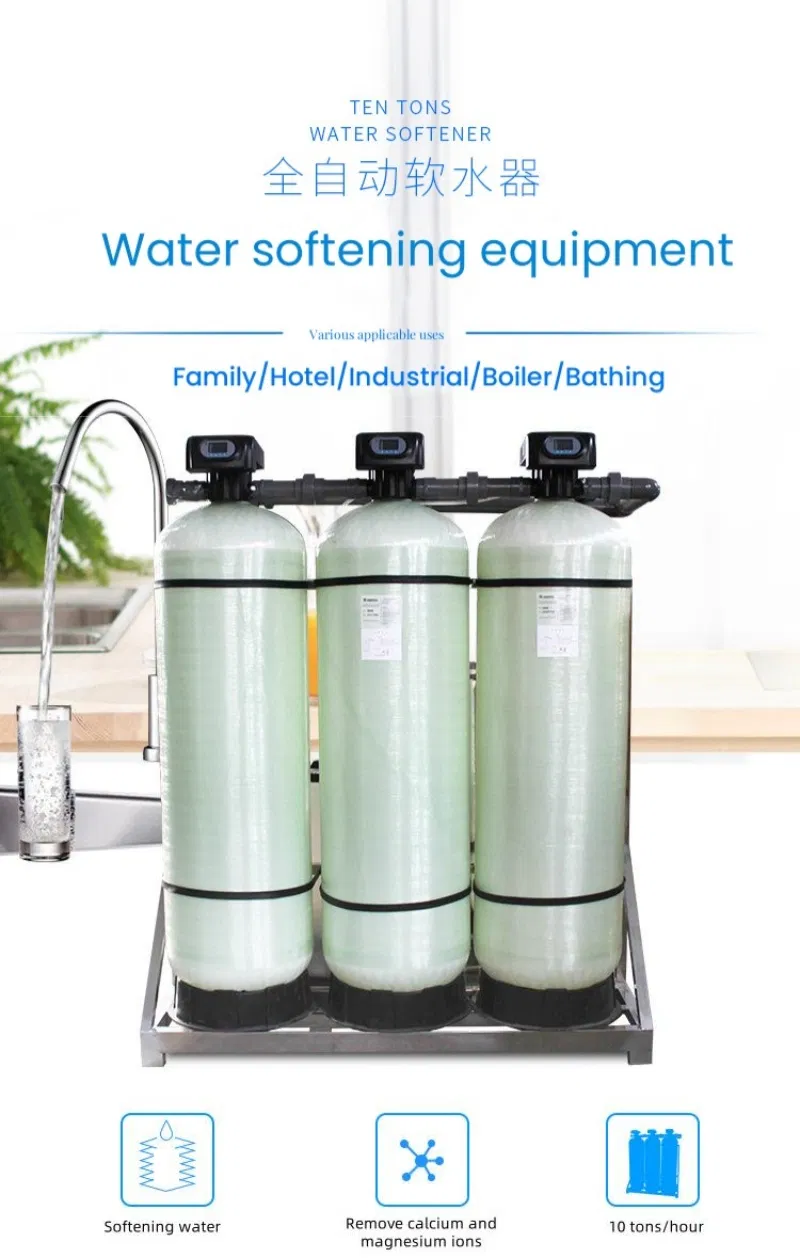
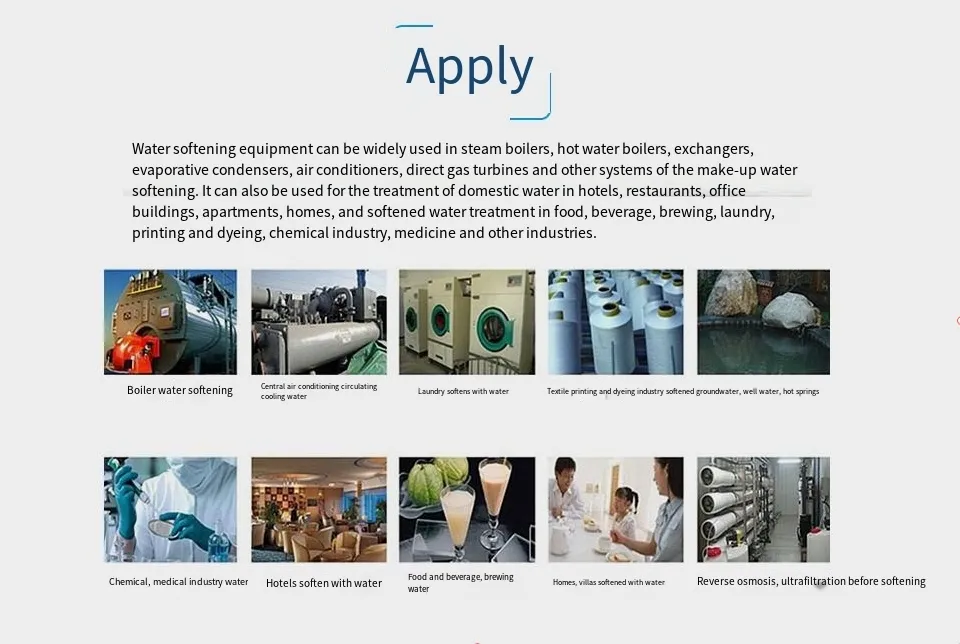
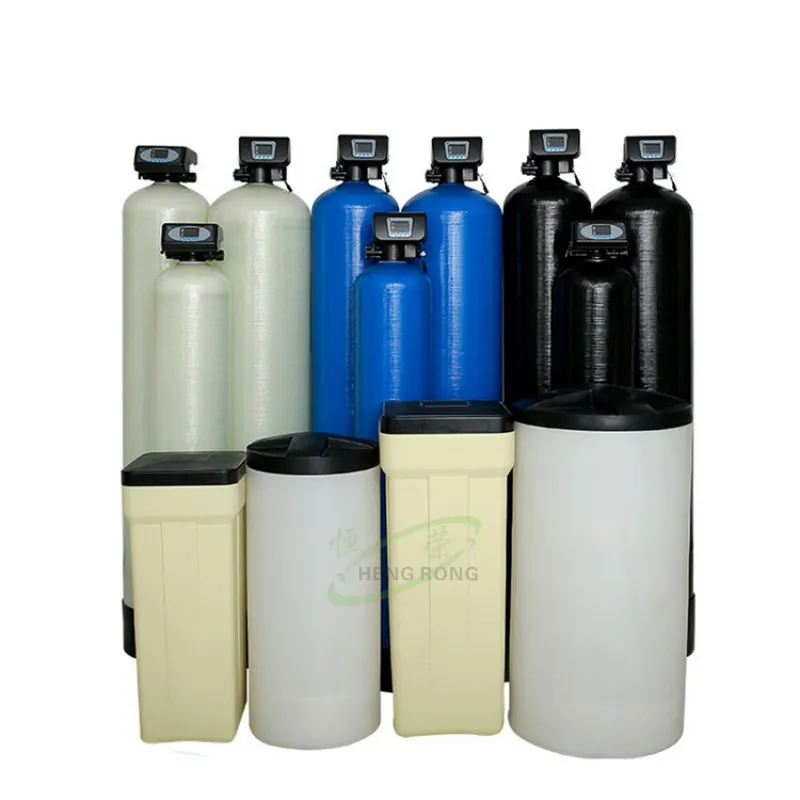
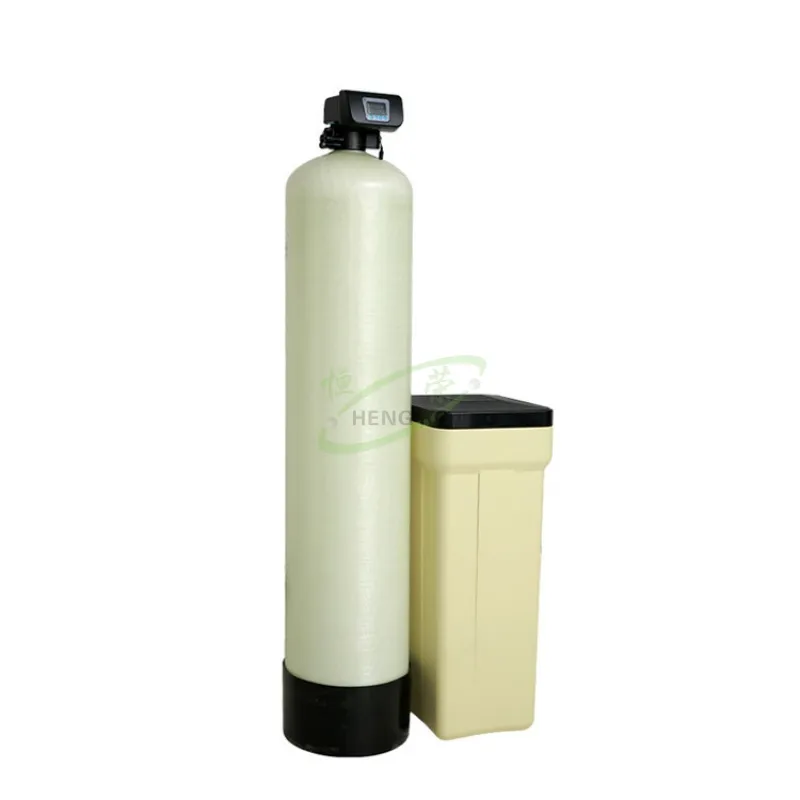
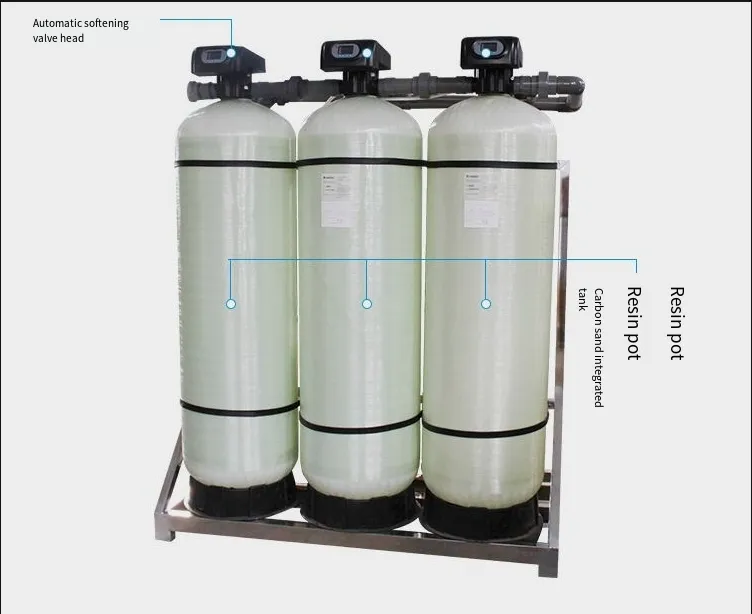
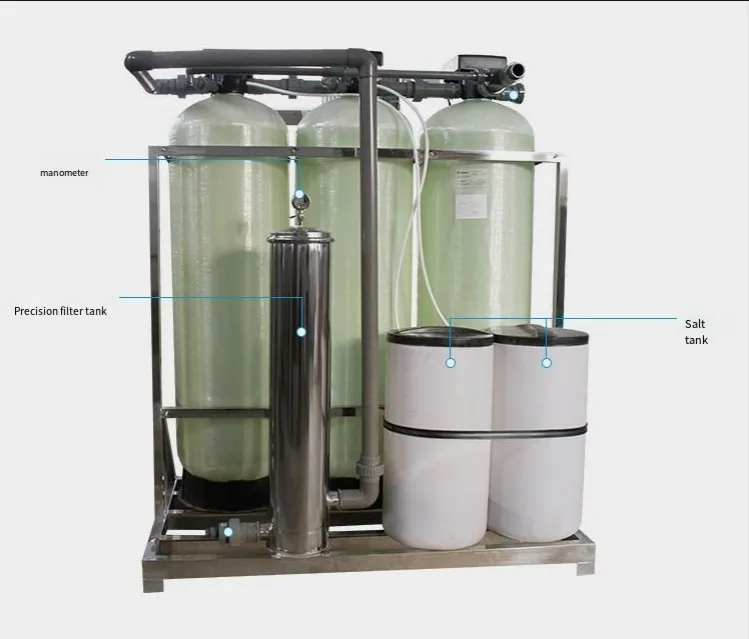
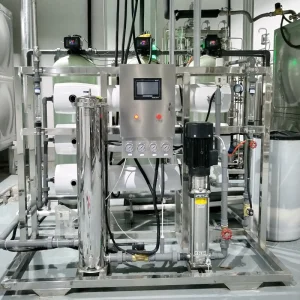
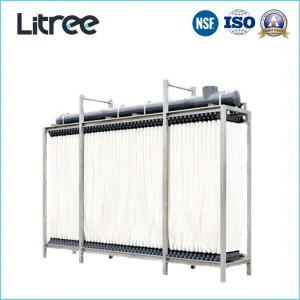
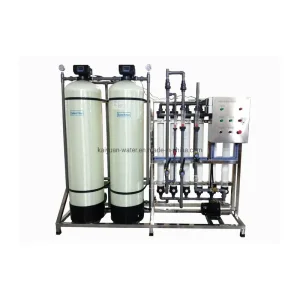
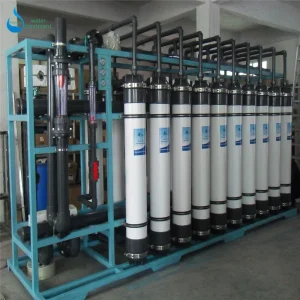
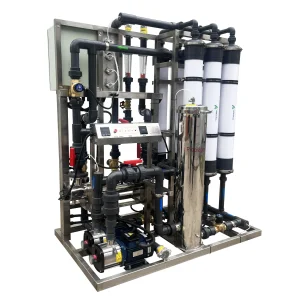
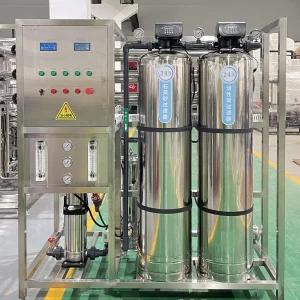
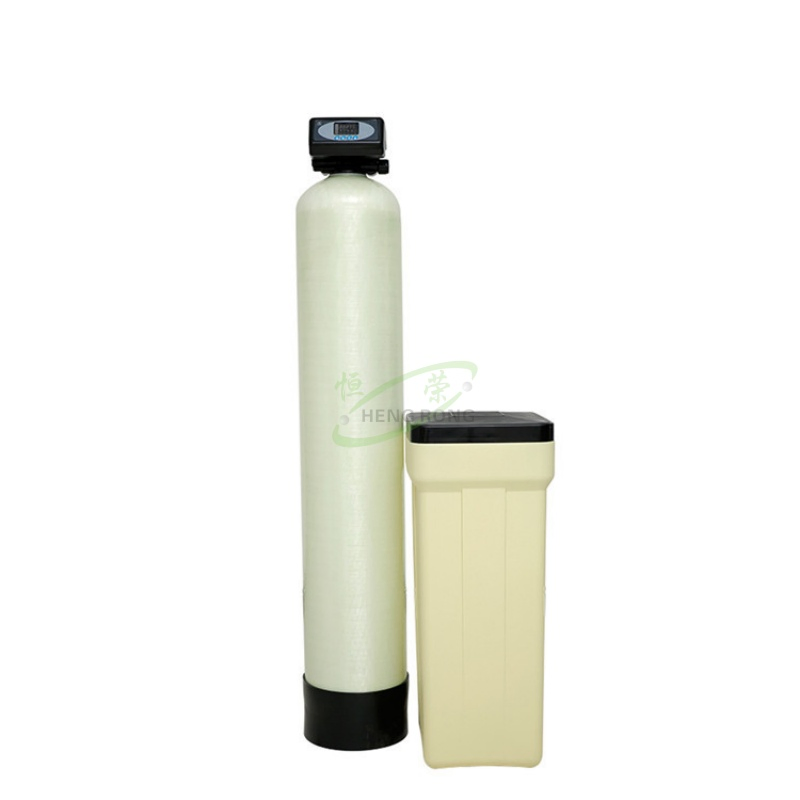
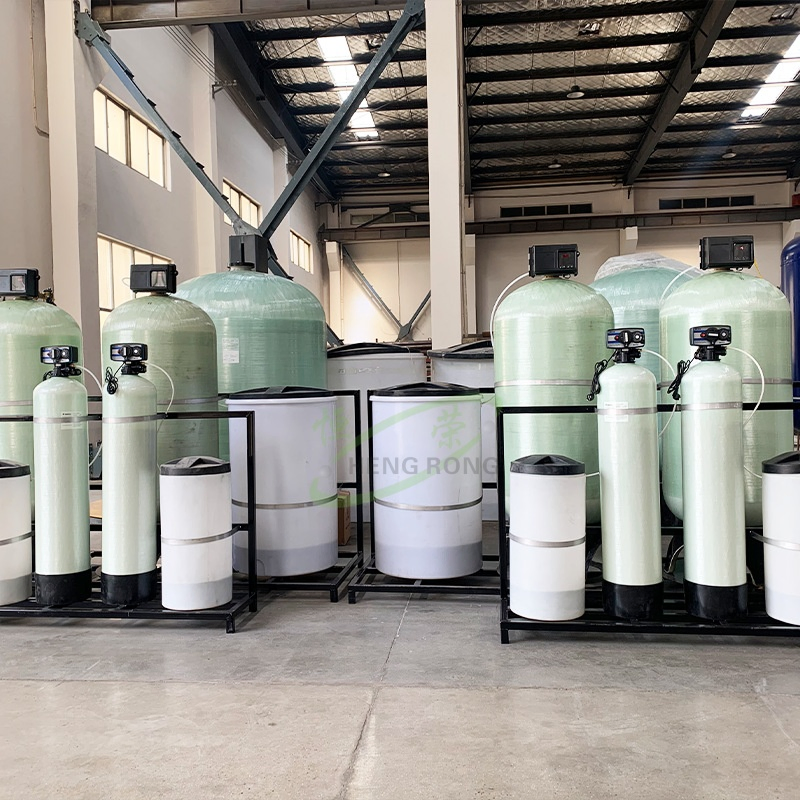
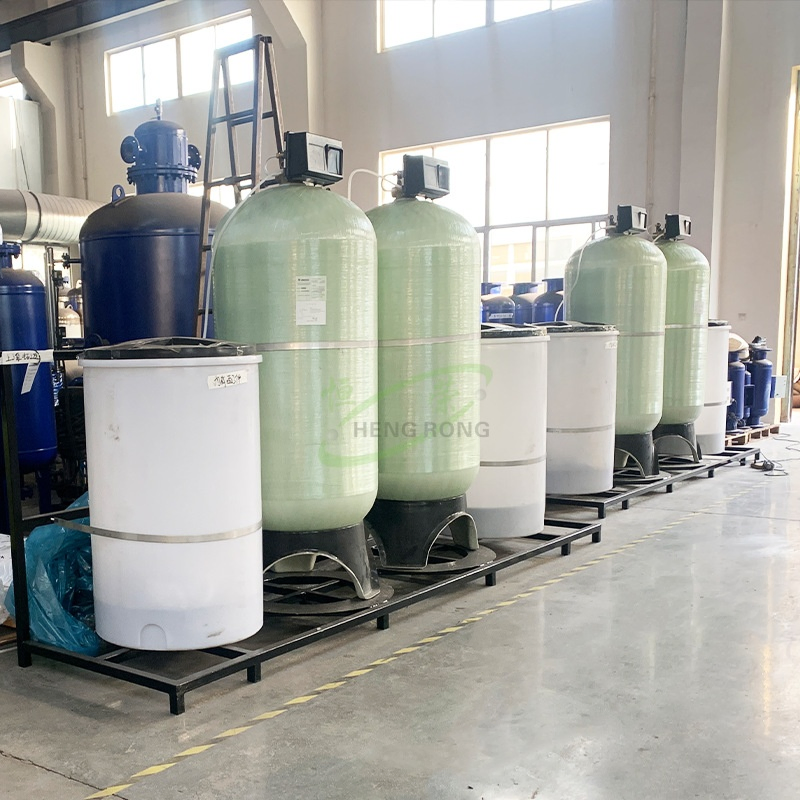
Water softening equipment is a device that can reduce water hardness, mainly used to remove calcium and magnesium ions from water, thereby reducing the formation of scale. The working principle of this type of equipment mainly involves using ion exchange resin to replace the calcium and magnesium ions in the water, thus softening the water.
The core component of water softening equipment is cation exchange resin. When the original water containing hardness ions passes through the resin layer inside the changer, the calcium and magnesium ions in the water react with the sodium ions adsorbed on the resin, causing the resin to adsorb the calcium and magnesium while the sodium ions enter the water. Thus, the water flowing out of the exchanger is softened water with hardness removed.
The operation process of water softening equipment mainly includes five steps: operation, backwashing, brining (regeneration), slow rinsing (placement), and fast rinsing. During the operation stage, the water softening equipment starts working and produces softened water. Subsequently, backwashing is conducted to remove contaminants from the upper part of the resin. Next is the brining stage, where brine is injected into the resin tank to prepare for regeneration. In the rinsing stage, raw water is slowly used to rinse the resin layer to thoroughly clean the salt out of the resin. Finally, in the fast rinsing stage raw water is quickly used to rinse the resin to ensure all residual salt is completely washed away.
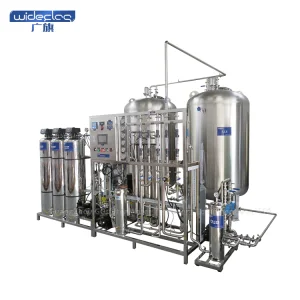
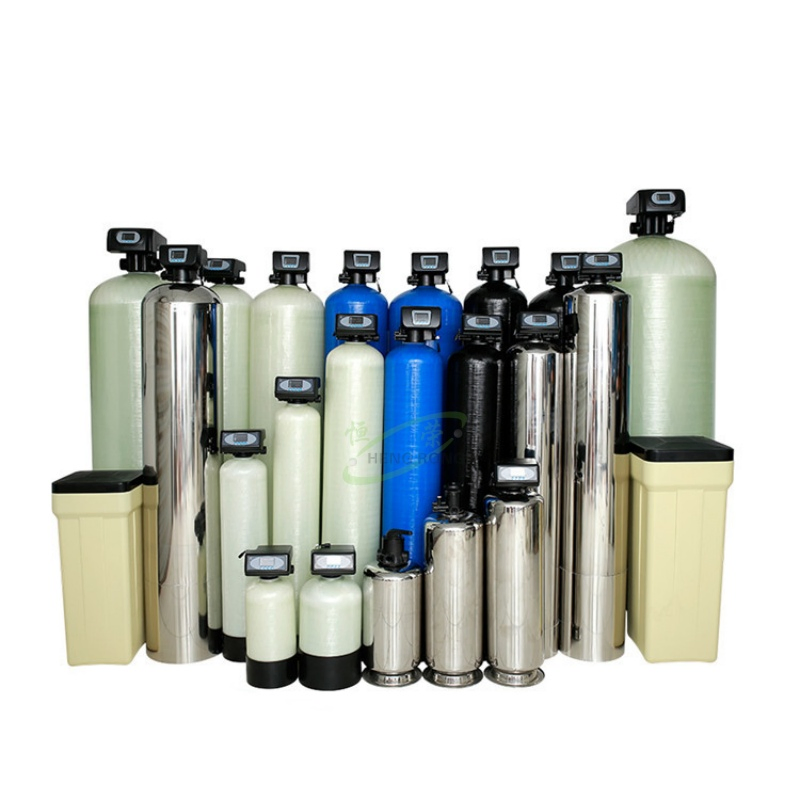
Specializing in the fabrication of stainless steel and carbon steel water treatment equipment, our facility is a center of innovation and craftsmanship. With advanced technical prowess and state-of-the-art production capabilities, we provide high-performance solutions for industrial water needs. Our diverse product line includes precision filters, sand carbon filters, softening tanks, RO membrane shells, aseptic water tanks, and mixing beds.
We employ leading argon arc welding technology and expert technicians to ensure product quality and service excellence. Our expertise covers a wide spectrum of water projects, ranging from domestic drinking water and pharmaceutical ultra-pure water to reclaimed water reuse and sewage treatment systems. We focus on four key principles: quality, service, technology, and reputation, striving to forge a clean and beautiful life through superior water treatment.
 Olaprixa Industrial