Olaprixa Industrial Olaprixa Industrial
China Top Carbon Filtration System Manufacturer & Factory

Premium Activated Carbon Adsorption & Advanced Industrial Wastewater Purification Engineering

Shanghai Olaprixa Industrial Co., Ltd.

Shanghai Olaprixa Industrial Co., Ltd. is a specialized manufacturer and engineering provider focused on advanced industrial wastewater treatment solutions, integrating sludge processing systems and intelligent chemical dosing technologies. Headquartered in Shanghai, China, the company delivers efficient, reliable, and customized water treatment systems for a wide range of industries including manufacturing, chemical processing, food production, and municipal infrastructure.

Olaprixa offers a comprehensive portfolio covering wastewater treatment equipment, sludge dewatering and thickening systems, and precision chemical dosing units designed to optimize treatment performance and operational efficiency. By combining modern process engineering with automation control, the company ensures stable system operation, reduced environmental impact, and compliance with global discharge standards.
15+
Years of R&D Experience
50+
Global Export Markets
200+
Large Scale Projects
100%
Compliance Guarantee
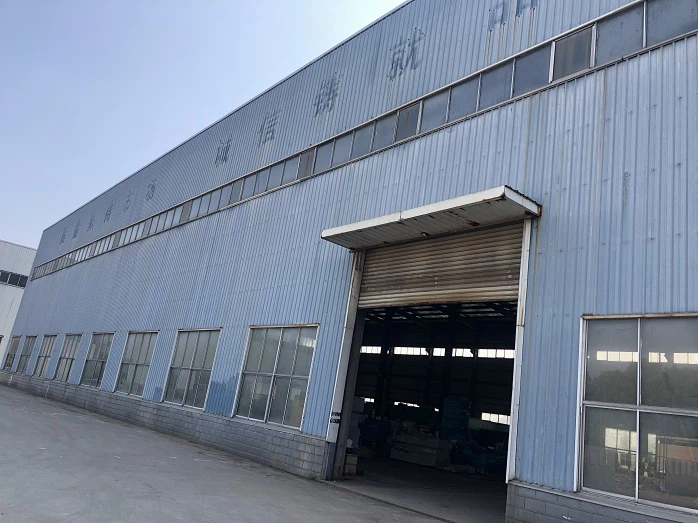
Shanghai Olaprixa Industrial facility and equipment manufacturing line

Activated Carbon Adsorption in Industrial Water Recovery

Activated carbon filtration represents one of the most effective and established methodologies for the extraction of micropollutants, dissolved organic compounds, volatile organic carbons (VOCs), halogenated organics, and chlorine from process waters and wastewater effluents. In modern industrial operations, strict regulations govern the discharge of chemical byproducts. This has positioned carbon filtration systems as essential units within tertiary treatment phases. As a premier manufacturer in China, Shanghai Olaprixa Industrial Co., Ltd. builds highly engineered activated carbon plants designed to deliver long-term process stability, high adsorption rates, and minimal operating costs.

1. Adsorption Physics & System Configuration

Adsorption within carbon filtration relies on the molecular-level interaction between the dissolved contaminants (adsorbates) and the solid carbon matrix (adsorbent). Activated carbon features a massive internal surface area—typically ranging from 800 to 1,500 m²/g—created by a dense network of micropores, mesopores, and macropores. The removal process occurs via physical adsorption, primarily driven by London dispersion forces (Van der Waals interactions), as well as chemisorption, where chemical bonds form between specific reactive organic compounds and the carbon surface functional groups.

Design Parameter Highlight: The performance of an industrial carbon filter depends heavily on the Empty Bed Contact Time (EBCT) and the hydraulic loading rate. EBCT, defined as the volume of the carbon bed divided by the volumetric flow rate, must be carefully designed based on target pollutant kinetics. A typical industrial process water application targets an EBCT of 10 to 20 minutes, while complex pharmaceutical or recalcitrant chemical effluents require up to 30 to 45 minutes to ensure target compound reduction.

Olaprixa’s carbon filtration systems utilize high-activity granular activated carbon (GAC) derived from premium coconut shells or select coal sources. Coconut-shell-based carbons are preferred for water purification due to their high density, low ash content, and highly developed micropore structures, which excel at trapping small organic molecules and chlorine byproducts.
Shanghai Olaprixa technical team designing automated water engineering controls

2. Integrated Wastewater Engineering Solutions

No single technology handles complex industrial wastewater alone. Modern zero-liquid-discharge (ZLD) and advanced recovery schemes require a coordinated process sequence. Olaprixa integrates carbon filtration with multiple process stages to protect media life and maximize overall system uptime:

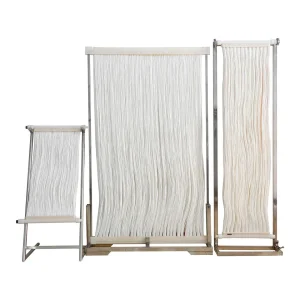
  • Biological & MBR Pretreatment: Biological processes, particularly Membrane Bioreactors (MBR), remove the bulk of biodegradable chemical oxygen demand (BOD) and chemical oxygen demand (COD). Passing untreated wastewater directly to carbon filters leads to rapid biofouling and pore plugging. By placing our hollow-fiber PVDF MBR systems upstream of carbon vessels, we remove suspended solids and active biological matter, keeping the carbon bed free to capture non-biodegradable and recalcitrant compounds.
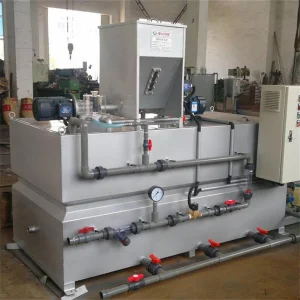
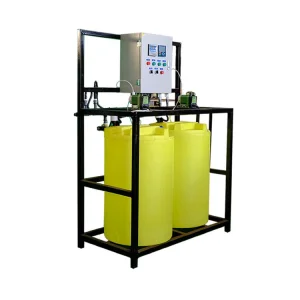
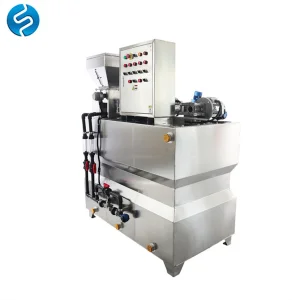
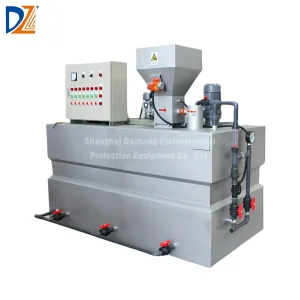
  • Intelligent Coagulant & Polymer Dosing: Suspended colloidal solids reduce adsorption efficiency. Our automated polymer preparation and dosing systems inject precise amounts of coagulants (PAC) and flocculants (PAM) into clarifiers or dissolved air flotation (DAF) units upstream. By settling fine particles early, the loading on the granular activated carbon bed is significantly reduced.
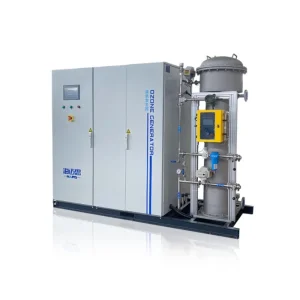
  • Ozone Oxidation Synergy: Combining ozone oxidation with carbon filtration creates a biological activated carbon (BAC) system. Ozone partially oxidizes long-chain, complex organic molecules, breaking them down into simpler, biodegradable compounds. The subsequent carbon filter acts as both a physical adsorbent and a biological reactor, where acclimated microorganisms on the carbon surface consume these bio-fractions, extending the carbon's operational life.

3. Automated Backwash and Fluid Dynamics

Over time, carbon beds act as deep-bed filters, trapping fine suspended solids. This buildup increases pressure drop across the bed. If ignored, it leads to flow channeling, fluid bypass, and poor adsorption. Our engineering designs address this by incorporating automated, PLC-controlled backwash valves and air-scour systems. When differential pressure transmitters indicate a set threshold (typically 0.5 to 0.7 bar), or after a predefined runtime, the system initiates a backwash sequence.

The backwash step reverses the flow direction, pumping clean water upward at a velocity designed to expand the carbon bed by 30% to 50%. This fluidization releases trapped particles, shearing away excess bio-growth and flushing it out through the backwash discharge outlet. Air scouring is introduced before or during the water backwash step to break up compacted carbon aggregates and ensure uniform cleaning.

Technical Specifications & Material Standards

Corrosion-Resistant Pressure Vessels

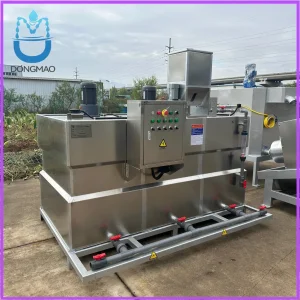
We build our vessels using carbon steel lined with high-grade vinyl ester, stainless steel 304/316L, or fiber-reinforced plastic (FRP). This selection ensures long-term reliability and resistance to corrosive chemical washdowns.

Automated Flow Control Integration

Our control panels use advanced PLCs with 4-20mA inputs and outputs. This allows real-time flow rate tracking, automated backwash cycles, and integration into plant-wide SCADA systems.

Custom Engineered Underdrain Internals

Proper flow distribution is critical to prevent channeling. We configure our underdrains with stainless steel wedge-wire lateral systems or nozzle plate arrays to distribute water evenly during filtration and backwash.

4. Applications Across Industrial Verticals

Industrial wastewater profiles vary widely by sector. Carbon adsorption parameters must be designed to match these specific chemical compositions to ensure efficient contaminant removal:

  • Chemical & Petrochemical Refining: Petrochemical effluents typically contain complex aromatic hydrocarbons, phenols, BTEX (benzene, toluene, ethylbenzene, and xylene), and aliphatic compounds. Our carbon systems serve as polishing filters to reduce total organic carbon (TOC) down to trace levels before final discharge.
  • Pharmaceutical & API Production: Active Pharmaceutical Ingredients (APIs) and synthetic intermediates are often toxic and resistant to standard biological treatment. Granular activated carbon (GAC) is highly effective at adsorbing these complex molecules. In these applications, we often configure systems in series (lead-lag arrangement) to prevent breakthrough and ensure complete capture of target compounds.
  • Food & Beverage Processing: Water used in food and beverage production must be free of chlorine, chloramines, off-flavors, odors, and trace organic contaminants. Olaprixa's activated carbon filters dechlorinate incoming feed water and protect downstream reverse osmosis (RO) systems from chlorine oxidation.
  • Textile & Dyeing Effluent Treatment: Dyes are highly visible pollutants composed of complex, synthetic aromatic structures. Carbon filtration is highly effective at removing residual color after initial biological or chemical coagulation treatment, helping plants achieve clean discharge.

5. Engineering Standards and Environmental Compliance

Industrial environmental compliance requires systems that meet rigorous international engineering standards. Olaprixa structures its manufacturing processes to align with global benchmarks, ensuring easy integration and permitting for installations worldwide:
  1. Pressure Vessel Codes: All steel pressure vessels are designed, fabricated, and tested in accordance with ASME Section VIII Division 1 requirements or European CE/PED (Pressure Equipment Directive) specifications, ensuring safe, reliable operation at typical system working pressures of 4 to 6 bar.
  2. Electrical and Control Systems: Our integrated control panels carry CE markings, utilizing UL-compliant electrical components, PLCs (such as Siemens or Allen-Bradley), and high-accuracy instrumentation to simplify on-site integration.
  3. Environmental Discharge Targets: Olaprixa carbon systems are designed to help operations meet strict local environmental targets. This includes achieving COD levels below 50 mg/L, TOC below 10 mg/L, and undetectable free chlorine concentrations, satisfying the requirements of US EPA NPDES permits, EU Directives, and China's GB8978-1996 standards.

Technical FAQ - Carbon Filtration Systems

Q1: What is the differences between Granular Activated Carbon (GAC) and Powdered Activated Carbon (PAC) in industrial wastewater treatment?
GAC consists of larger particles (typically 0.8 to 4.0 mm) and is used in fixed-bed or fluidized-bed vessels. This configuration allows continuous process water flow and supports thermal reactivation. PAC has a much smaller particle size (typically <0.15 mm) and is dosed directly into aeration basins or clarifiers as a slurry, where it must be settled or filtered out. PAC is often used for seasonal or fluctuating contaminant loads, whereas GAC is preferred for continuous, automated operations.
Q2: How do you determine the required Empty Bed Contact Time (EBCT) for a specific contaminant?
EBCT is calculated as: EBCT = (Bed Volume) / (Volumetric Flow Rate). The optimal value is determined through pilot testing or laboratory isotherm studies. Easy-to-adsorb compounds like chlorine require short contact times (2 to 5 minutes). Complex organic compounds, chlorinated solvents, and pharmaceutical residues typically require longer contact times (15 to 30+ minutes) to achieve target discharge concentrations.
Q3: What parameters trigger an automatic backwash sequence in Olaprixa’s carbon systems?
Our systems use three parallel triggers: 1) Differential pressure (DP) across the bed, typically set between 0.5 and 0.7 bar; 2) Total accumulated operating hours; and 3) A manual override. When any of these parameters are met, the PLC opens the appropriate automatic control valves and initiates the backwash and air-scour sequence.
Q4: Can activated carbon remove heavy metals from industrial wastewater?
Standard physical activated carbon has a low capacity for heavy metals. However, modified or chemically impregnated carbons (such as sulfur-impregnated or acid-washed varieties) can capture select dissolved metals through chemisorption. For effluents with high heavy metal concentrations, we recommend using ion exchange or chemical precipitation upstream of the carbon filters.
Q5: How does chlorine affect the physical structure of granular activated carbon?
Unlike organic adsorption, dechlorination occurs via a catalytic chemical reaction where free chlorine (HOCl or OCl-) reacts with the carbon surface to produce chloride ions (Cl-) and carbon oxides. This reaction consumes a small amount of carbon over time. The carbon bed has a high capacity for chlorine removal, but this process gradually degrades the media's structural integrity, requiring replacement after 3 to 5 years.
Q6: What materials of construction do you recommend for highly corrosive chemical streams?
For acidic or high-chloride applications, we construct our vessels from FRP or carbon steel lined with thick, chemical-resistant vinyl ester or rubber. Internal pipework, distributors, and underdrain nozzles are typically made from PVC, PVDF, or stainless steel 316L to prevent corrosion and protect system integrity.
Q7: How is spent activated carbon managed or regenerated?
Once the adsorption capacity is exhausted, the GAC must be replaced. In large-scale applications, spent carbon is returned to a thermal reactivation facility, where it is heated to high temperatures (over 800°C) in a controlled atmosphere to burn off adsorbed organics and restore its pore structure. For smaller installations or hazardous effluents, spent carbon is disposed of in accordance with local environmental regulations.
Q8: How does temperature affect the adsorption capacity of activated carbon?
Because physical adsorption is an exothermic process, higher water temperatures reduce adsorption efficiency. Lower temperatures increase adsorption capacity, but they also decrease diffusion rates within the micropore network. In warm industrial applications (above 40°C), we recommend installing a heat exchanger upstream to cool the wastewater and maximize adsorption efficiency.