 Olaprixa Industrial
Olaprixa Industrial
Olaprixa Industrial
Explore our first-line automatic polymer preparation and chemical dosing systems designed to guarantee homogeneous dilution and precision metering. Optimized for the demanding municipal and industrial landscapes of Eswatini, our machinery ensures zero polymer fish-eyes, optimal flocculant hydration, and significant cost savings on chemical raw materials.
Eswatini, a landlocked sovereign state in Southern Africa, is experiencing accelerated industrialization and infrastructure modernization. Key economic drivers such as large-scale sugarcane processing (concentrated in the Lowveld region around Mhlume and Simunye), pulp and forestry manufacturing, textile operations in Matsapha, and regional gold and coal mining developments place enormous pressure on municipal and industrial water cycles. Efficient liquid-solid separation, sludge dewatering, and closed-loop process water reclamation are critical to preserving Eswatini's precious natural river catchments, including the Lusutfu and Komati basins.
With the Eswatini Environment Authority (EEA) enforcing more rigorous industrial effluent guidelines, local factories and municipal utilities can no longer afford manual, inefficient flocculant mixing. The usage of high-efficiency, fully automatic Polymer Dosing Systems is now standard operational practice. As a reliable manufacturing partner, Shanghai Olaprixa Industrial Co., Ltd. bridge the gap between advanced Chinese process engineering and localized plant requirements in Eswatini, delivering robust systems built to withstand the region's climatic and operational realities.
Polymers and polyelectrolytes (PAM/PAC) represent a significant portion of operating budgets. Our automated systems guarantee complete particle hydration, preventing costly chemical wastage ("fish-eyes") and cutting annual chemical spends by up to 35%.
Discharge criteria in Matsapha's industrial sectors dictate strict limits on suspended solids (TSS) and biological oxygen demand (BOD). Precise polymer metering maximizes floc clarifier efficiency, helping companies easily meet the EEA's stringent environmental protocols.
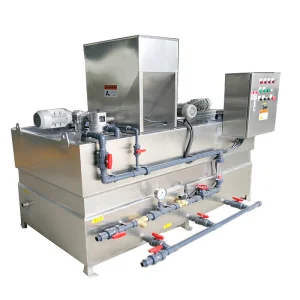
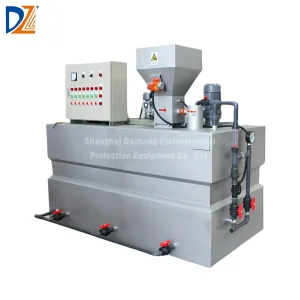
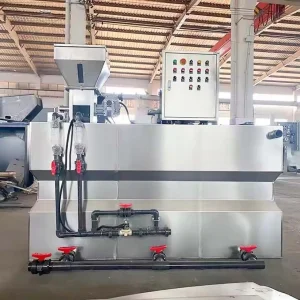
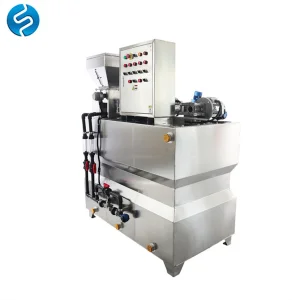
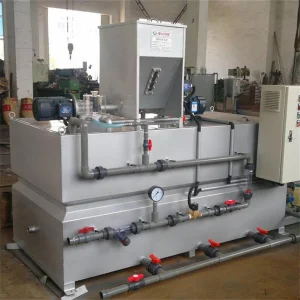
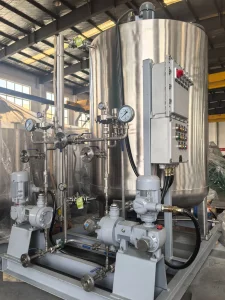
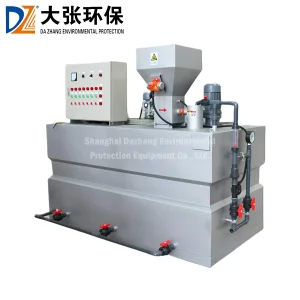
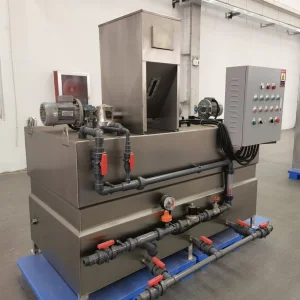
Featuring integrated PLC controllers (Siemens/Allen-Bradley), automated dry powder conveying, multi-chamber continuous dissolution tanks, and precise multi-channel dosing pumps, minimizing labor requirements while ensuring stable system operations.
Different industrial processes require distinct handling methods. While municipal wastewater treatment facilities rely heavily on continuous liquid-to-powder dissolution, industries handling granular materials or heavy sludges require specialized dry-conveying, weighing, and SS304/SS316 structural skids. This selection of systems showcases Shanghai Olaprixa's capability to customize plants according to your exact mechanical footprints.
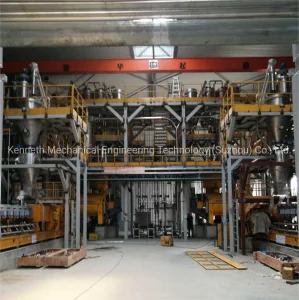
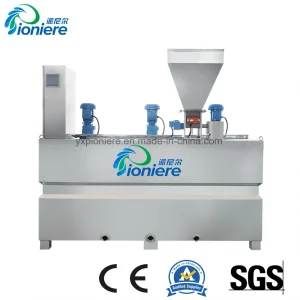
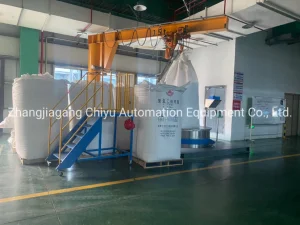
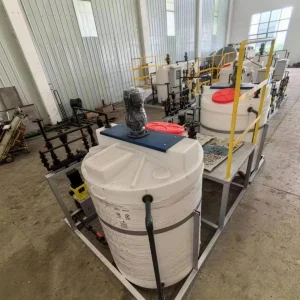
Polymers (specifically Polyacrylamides or PAM, including cationic, anionic, and non-ionic varieties) are highly structured organic molecules with extremely high molecular weights. Effective coagulation and flocculation demand a complete, uncoiled macromolecular chain to capture and bridge colloidal particles. If dry polymer granules are poorly wetted or subjected to excessively violent shear stress during dissolution, the molecular chains break down, leading to poor settling velocities, high chemical consumption, and clogged downstream filters.
Our state-of-the-art polymer dosing plants integrate advanced dry-powder wetting technology with multi-stage agitation tanks. The process relies on a precisely controlled physical-chemical sequence:
1. Sugarcane Processing Clarification: Sugarcane juice clarification represents a vital stage in Eswatini's sugar mills. Precise flocculation separates bagasse fibers and micro-impurities rapidly. The use of our food-grade stainless steel dosing skids ensures consistent juice purity and speeds up boiling operations without risk of chemical contamination.
2. Mineral Beneficiation and Coal Washing: Coal and mineral operations require extensive wash water recycling. High-capacity polymer preparation units ensure immediate settling in thickener tanks, allowing rapid recovery of clarified process water and dry-stack tailings management, optimizing water loop recycling rates up to 95%.
3. Municipal and Industrial Wastewater Plants: Local municipal facilities in Mbabane, Manzini, and Matsapha require continuous sludge dewatering. Our double or triple-chamber polymer units ensure consistent aging times (minimum 45 to 60 minutes) so that active polymers are perfectly prepared before being injected into belt presses, decanter centrifuges, or multi-disk screw presses.
Browse our complete, highly customizable portfolio of chemical preparation stations and dosing skids. From skid-mounted compact modules for low-flow municipal sites to multi-chamber high-output automated dosing towers, we supply and export premium-engineered solutions across Eswatini.
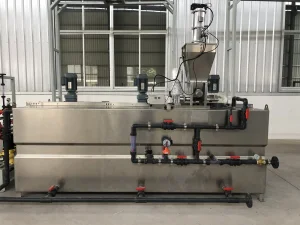
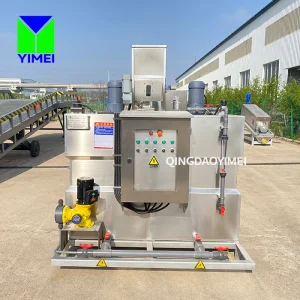
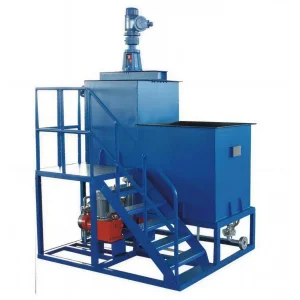
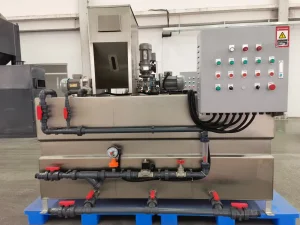
Procuring advanced machinery from global manufacturers can often raise concerns about delivery logistics, after-sales setup, and technical maintenance. Shanghai Olaprixa Industrial Co., Ltd. has developed a robust export and deployment framework specifically for the Southern African Development Community (SADC) region, offering direct engineering support and customized logistical lines directly into Eswatini.
Our dedicated logistics department handles all necessary documentation, including SADC certificates of origin, import compliance procedures, and custom clearance pathways. We ensure smooth delivery via the Port of Maputo or Durban, direct to your factory in Eswatini.
Our commissioning engineers coordinate with your local mechanical and electrical technicians. We supervise local piping connection, sensor calibration, and PLC programming, followed by extensive hands-on operational training for local plant crews.
Equipped with integrated telemetry capabilities, our smart dosing systems support remote monitoring. In the event of PLC updates or process adjustments, our Shanghai-based automation specialists can log in remotely to diagnose and troubleshoot instantly.
As global water scarcity escalates and ESG commitments become core components of corporate values, chemical treatment plants are evolving from traditional static flow units to intelligent, closed-loop responsive systems. Our technological design roadmap focuses on three main developments:
1. Viscosity-Responsive Dosing: Integrating real-time rheological sensors in the aging chamber to continuously monitor the actual dissolved viscosity of the polymer. The system automatically fine-tunes dry-powder feeding speeds and agitator RPMs to compensate for variations in local water hardness or temperature.
2. AI-Driven Flocculation Feedforward Loops: By connecting our dosing skid PLC with upstream turbidity, suspended solids, and zeta-potential sensors, the dosing system can dynamically adjust the polymer injection rate. This ensures optimal floc clarification even when receiving unpredictable influent spikes from heavy downpours or production shifts.
3. Modular Skid Designs for Rapid Expansion: As Eswatini's industrial parks expand, our modular "plug-and-play" skid architectures allow operators to double or triple their treatment capacity by retrofitting additional dissolution tanks without rewriting the central PLC code or replacing the entire skid.
Gain absolute clarity regarding the design, operation, and maintenance of modern polymer dosing configurations for industrial and municipal operations.
For anionic and non-ionic dry polymers, a minimum aging time of 50 to 60 minutes is required under gentle agitation. Cationic polymers typically require around 45 to 60 minutes. Operating a dosing system with insufficient aging leads to unhydrated polymer "blobs" that will blind filters and downstream dewatering belts. Our triple-chamber systems guarantee this maturation time via automated overflow baffle configurations.
Polyelectrolyte solutions can be highly viscous and slightly corrosive depending on local water chemistry and chemical additives (such as PAC or chlorine). Furthermore, industrial sites in Eswatini face high temperatures and humidity. SS304/SS316 offers unparalleled structural longevity, prevents scaling, and eliminates corrosion risks, ensuring a system lifespan exceeding 15 to 20 years.
"Fish-eyes" form when dry powder hits water without immediate, high-velocity dispersion, creating a sticky outer layer that isolates dry powder inside. Our systems utilize an advanced high-velocity water-injector wetting device. The dry powder is pneumatically dispersed and individually wetted by a high-velocity water vortex before falling into the dissolution chamber, ensuring complete, clump-free hydration.
Yes. All Shanghai Olaprixa automated dosing skids are designed with Ethernet, Modbus RTU/TCP, or Profibus communication interfaces. This allows seamless integration into your local factory DCS or municipal SCADA system, enabling control room operators to monitor tank levels, pump flow rates, and active alarms in real-time.